Our conclusion
Why the Gaelic Ó Comáin family has no historic coat of arms
The reason is historically important and straightforward: coats of arms did not exist during the period when the Ó Comáin family was at the height of its power. The Chiefdom of Tulach Commáin flourished in the 8th and 9th centuries AD. Coats of arms as a formal heraldic system did not begin to develop anywhere in Europe until the 12th century, arriving in Ireland only with the Norman invasion after 1169.
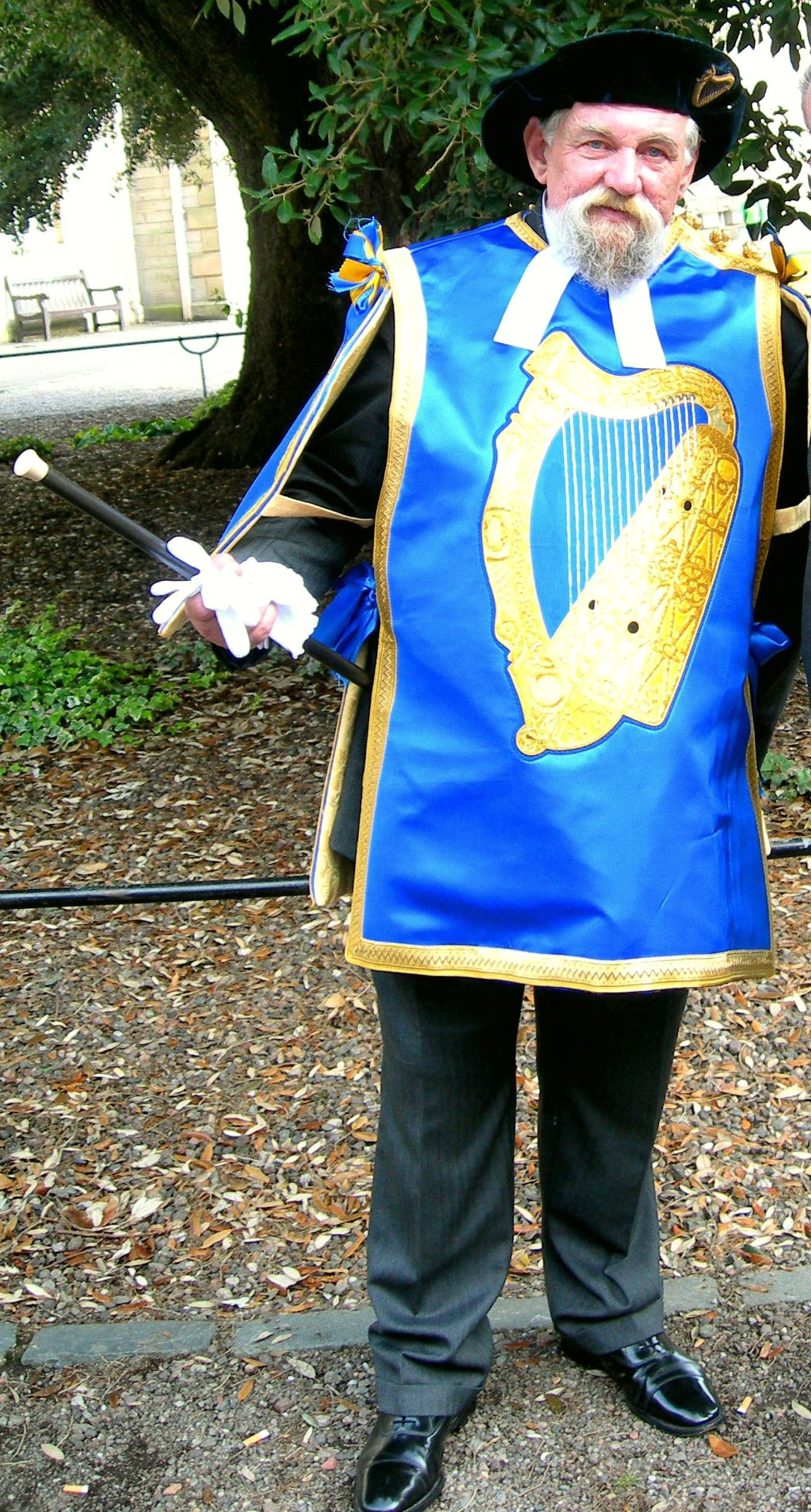
By the time heraldry existed, Cahercommane had been abandoned for two centuries and the chiefdom had faded from the historical record. When the Ulster King of Arms was established in Dublin in 1552, the Ó Comáin family had been without territorial authority for over 300 years — since the dispossession of Conall O'Comain in 1225. The family had, as so many Gaelic families did, lost the institutional memory of its own history.
Even the Kavanaghs — one of the most powerful Gaelic dynasties in Leinster — when seeking a formal grant of arms in 1582 declared that they were "uncertain under what sort and manner their predecessors bore the said arms" and had to request the Ulster King of Arms to assign arms to them entirely afresh. This was the common experience of dispossessed Gaelic families.
Warning
Commercial arms sold under the Commane / Cummins name
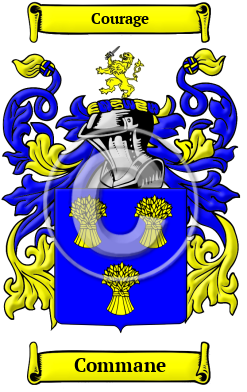
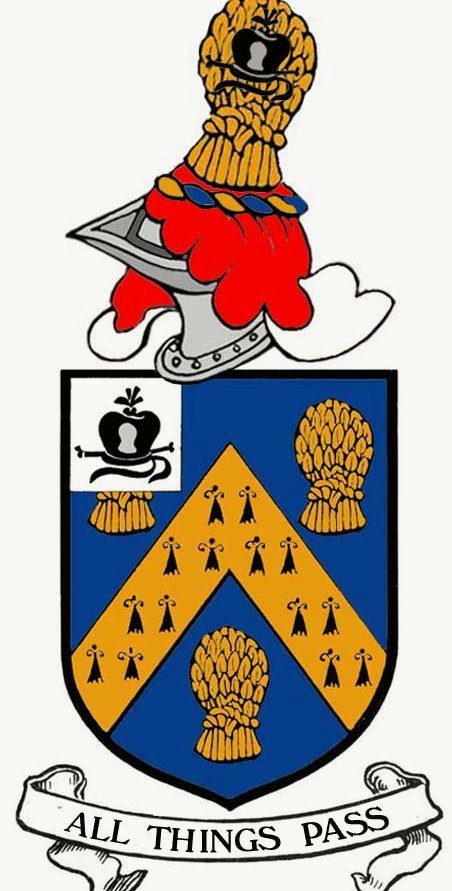
Numerous commercial heraldry websites sell prints, plaques and jewellery bearing a variation of the Norman Comyn arms — blue and gold sheaves — labelled as the "Commane," "Cummins" or "Comyn" family coat of arms. These have no authentic connection to the Gaelic Ó Comáin sept of Clare and are Norman heraldry incorrectly attributed on the basis of phonetic name similarity alone.
Members of Clan Ó Comáin are asked not to purchase these products. The clan's authentic arms are currently pending a formal application to the Chief Herald of Ireland.
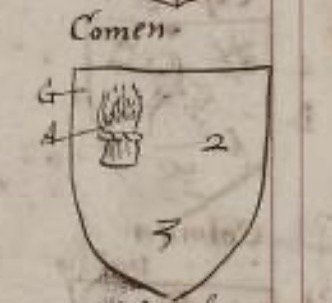
The "Comen" entry on page 83 of the Ulster King of Arms manuscript c.1650 is most likely the Norman Comyn arms recorded under an Irish phonetic spelling — not evidence of an independent Gaelic heraldic tradition for the Ó Comáin sept of Clare.
The commercial arms sold online as "Commane," "Cummins" or "Comyn" family crests are Scottish-Norman heraldry belonging to the House of Comyn of Badenoch — a dynasty from Flanders with no documented connection to the Gaelic Ó Comáin family of Clare, Munster or Connacht.
This conclusion is supported by the scholarship of E. St. John Brooks in the Journal of the Royal Society of Antiquaries of Ireland (1956), and is consistent with the broader scholarly understanding of how Gaelic families' heraldic memory was lost during the centuries of dispossession following the Anglo-Norman invasion.
The right approach — a grant of arms from the Chief Herald
Clan Ó Comáin is pending application with the Office of the Chief Herald of Ireland for a new grant of arms. This is the correct, most prestigious and most historically honest course of action available to the clan — a living heraldic document with full legal standing, grounded in one of the most thoroughly researched Gaelic pedigrees presented to the Chief Herald's office in recent years.
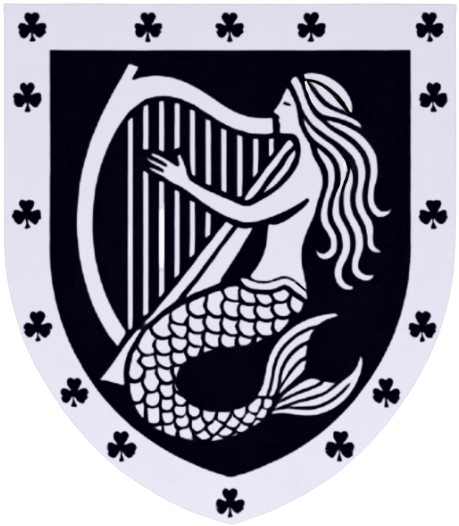
The grant will incorporate elements drawn from the ancient Gaelic Ó Comáin heritage — among them the mythical mermaid of Newhall Lake, the Irish harp, and the shamrocks of the family's saints. The Office of the Chief Herald recognises the concept of clan or sept arms, under which any member of the clan may display the arms — not merely the individual grantee. A grant to the Chief therefore provides a heraldic identity accessible to all members of Clan Ó Comáin worldwide.
This approach follows well-established precedent. Ancient Gaelic families whose arms were lost with their history have been granted new arms by the Chief Herald throughout the modern period, grounded in their documented noble and royal ancestry. The Ó Comáin pedigree — traceable to the Kings of Déisi Munster and the royal line of Uí Maine, documented in the Book of Lecan, the Book of Leinster and the Annals of Ulster — is among the most thoroughly documented presented to the office in recent years.
In the meantime
Members of Clan Ó Comáin are asked not to purchase or display the commercial "Commane arms" products sold online. These represent Scottish-Norman heraldry that does not belong to the Gaelic sept and perpetuates a historical confusion that this clan is working to correct.
Chief-approved use of the crest and coat of arms is available to registered clan members only. The story of that grant — an ancient Gaelic clan whose arms were lost with its history, now claiming its rightful place in the Irish heraldic tradition — will itself be a meaningful chapter in one of the oldest and most remarkable family stories in Ireland.