
In the Gaelic tradition the seanchaí was the keeper of memory — the one who held the stories, the laws and the lore of the people, and told them aloud so they would not be lost. Paddy carries that office for the clan, and when he tells, he becomes the tale.
Pull your chair in. Before there were courts in wigs, before a word of English law was ever read aloud on Irish soil, our people had a law of their own — and they kept it, in their heads and in their hearts, for a thousand years and more. I'll tell it to you the way it was told to me. Some of it is hard fact, set down in old books you can still read today. Some of it is the kind of story that's truer than fact. You'll know which is which as we go.
They called it fénechas — the law of the free kindred. But nobody remembers it by that name now. They remember it by the men who carried it: the brithem, the judge — brithemain in the plural, which the English tongue wore down into brehons. And so it has been Brehon law ever since.
Now, a brehon was no common man. He was lawyer and judge and umpire and scholar all in the one skin, and his head was the law-library of his people — for he carried the whole of it in there, not on any shelf. You did not rise one morning and decide to be a brehon. You were born to it, or given to it as a small boy, and then you spent the best part of twenty years learning the law by heart, word for word, before a soul would trust you to settle so much as a quarrel over a strayed goat. Twenty years. Hold that in your mind the next time someone tells you the old Irish were a wild and lawless crowd.
And here is the thing that catches people unawares. This law that scarcely anyone has heard of was, by any fair reckoning, among the cleverest and most humane bodies of law to survive anywhere in medieval Europe. It had a rule for marriage and a rule for the leaving of one. It set out the rights of a child, the duties of a guest, the bond between a foster-son and the woman who reared him. It gave women a standing they would not see again on this island for the best part of a thousand years. It put a price on a man's good name, and made you pay it to the last cow if you blackened him. The crown of England spent the guts of two centuries grinding it out — and even then, away out in the country, the heart of it kept beating long after the law-books called it dead. Some of it is beating yet.
Let me bring you through it, so — what it was, what it held dear, and what, here in this clan, it has quietly begun to do again.
A law older than its writing down
Here is a thing to keep by you as we go: the law was old before ever a line of it was written down. Older than the alphabet that came to these shores. The brehons kept it the way a people keeps everything that truly matters — in the memory, handed down mouth to mouth, father to son, master to pupil, along the long chain of the generations.
The oldest books that carry it were written around the seventh and eighth centuries after Christ. But the law inside them is plainly far older than the ink. How would we know such a thing? Because it speaks of weapons no warrior had carried in centuries, and ranks of men long since gone, and measures of wealth nobody used any more. The scribes were setting down a thing already ancient in their own day — the way a grandfather might write out the songs of his grandfather's grandfather, half the words gone strange in his mouth.
And why write it at all, after the long silent centuries? Because the new faith had come. Patrick and his monks brought Christianity in the fifth century, and the Roman habit of ink and vellum along with it. Another people might have flung out the old law to please the new God. Not the Irish. The Irish did what the Irish have always done — wrote down the whole of it, set the old beside the new, and let the two of them argue it out between themselves for the next thousand years.
What came of that is a wonder: the largest body of law in any common tongue to survive from any people in early-medieval Europe. The great collection is the Senchas Már, the "Great Tradition" — some forty separate tracts gathered into the one mighty corpus. Beside it stand the Bretha Nemed, the "Judgements of the Privileged," and a whole shelf of lesser books, each minding its own corner of life: the Críth Gablach on a man's rank and worth, the Bretha Crólige on the nursing of the wounded, the Cáin Adomnáin on the sheltering of women and children from war. Each one is a little window, and through every one of them you can watch a single people thinking long and hard about the oldest question there is — how are we to live alongside one another, and what do we owe?
Not the individual, but the kindred
The first thing you must take hold of — and it sits strange in a modern head, so go at it slowly — is this. In the eye of the old law, the one who mattered was not the man stood before you. It was his kindred.
The Irish word is fine. Your fine was your people, reckoned through the fathers — and in the eye of the law you and they were the one body, joined at the purse and at the conscience. Take it plainly. A man of your kindred does a wrong, draws blood in a quarrel — and it is not he alone who pays the fine, but the whole of you, reaching into your own cattle to cover his debt. And turn it round: a man wrongs you, and it is not you alone he must answer, but the full weight of your people stood at your back. You wished to marry? Your fine was consulted. You died with no child to follow you? Your land fell to no "state" — the Irish had no patience for such a notion — but back to the fine, who had held a quiet claim on it all along.
And the Irish did love a precise thing, so they drew the ring of the kindred with a careful hand. It reached up to take in all the descendants of your great-great-grandfather, and down as far as your own great-grandchildren — and not one soul beyond. Step outside that ring and you had no claim on those people, nor they on you. Step inside it and your fortunes were shared in earnest — your debts, your feuds, your good name, all of it held in common. Your fine was not merely your relations. Your fine was who you were.
And that, now, is why the clan was no small matter. Several kindreds together made a clan — a cenél, a clann; several clans together made a túath, the smallest free country there was, with its own king set over it. So the whole of Irish society was built upward like a nest of rings, each one inside the next, from the hearth-fire to the kingdom, and every ring bound to its neighbours by what was owed. A clan, you see, was never a flag to wave nor a warm feeling in the breast. It was a hard fact of law — a thing with teeth in it. And in the old corners of this country it is a fact still, in ways most Irish people walk clean past and never notice.
The threshold of standing
You will have met the phrase before — a year and a day. It runs all through the law of the English and the Scots. Hold a stolen thing a year and a day and it becomes yours against the world; a widower outlives his wife by a year and a day and certain rights fall to him. The lawyers of London and Edinburgh have worn that phrase smooth with the handling of it.
But the phrase is not theirs. It is ours. It is Brehon.
In the old Irish law, a year and a day was the threshold a thing had to cross before it became real — the claim that hardened into a right, the holding that became a true holding, the bargain that ripened into one a brehon would enforce. And the thought beneath it was a deep one: that to truly belong to a thing, you must give it time. To arrive was not enough. To claim was not enough. To lay your hand on a thing and say "mine" was not enough. You had to stay — to let the whole wheel of the year turn round past you, the summer and the harvest and the black of winter and the green rising again — and only then, with a fresh year opened, was the thing truly your own.
And is that not a shrewd rule, and a lovely one together? Shrewd, because a year is long enough for a neighbour to show you the cut of him — and the kindred would know that before they took a man to their hearts. Lovely, because it made plain endurance into a virtue with a name to it. Your standing was not bought, and it was not sworn in an afternoon. It was earned the slow way, by lasting. The year made you, far more than any paper could.
You meet the rule the length and breadth of the old books, in a score of guises. The nursing of a wounded man ran a year and a day. A claim against your land had to be answered inside a year and a day, or it withered on the branch. The fostering of a child came of age at a year and a day. It turns up so often that it became the very signature of the law — a measure not of legal time only, but of moral time.
The Oath of Standing
Clan Ó Comáin has revived the year-and-a-day principle for the modern era. New members of the clan stand as Observers for their first year. At a year and a day on the Register, they pass to Standing Members — with voice and vote at the Annual General Meeting, and the option, if they wish, to take the Oath of Standing. The principle behind it is the original Brehon one: standing is something time confers, not something money buys.
The price of a person
Now here is the notion that stops a person in their tracks the first time they meet it. The old law called it lóg n-enech — and the words mean, near enough, "the price of the face." Your honour-price.
Every free soul in Gaelic Ireland walked the world with a price on their face. Not a price to buy them — never that — but the sum a wrongdoer must lay down before them if they were grievously wronged: a foul insult, a wound, a broken bargain that shamed them before their people. And the price ran by your standing. A king's face might be worth two-and-forty milking cows. A great poet's, the very same — for the Irish reckoned a poet as high as a king, and with good reason, as you'll hear before we're done. A strong farmer with land under him, ten cows maybe. A young craftsman, a cow or two. And a bondsman at the foot of it all had no price of his own at all — wrong him, and it was his lord you had insulted, and his lord you paid.
It sounds a hard, cold reckoning to the modern ear, I'll grant you — the putting of a number on a person. But turn it over and look at the underside, for there is a kind of genius in it. It was the nearest thing early Europe ever built to a worked-out science of human dignity. Every free man and woman had a worth that was known — a worth they could stand on, point to, defend, and win back if some blackguard tried to strip it from them. The law handed you a number, and that number was your good name made solid. Wrong me, and the law could tell you to the last cow what your contempt would cost.
And mark this well — the number was no brand burned on you at birth. It could rise. A man of small beginnings who proved himself in arms or in learning could be lifted up through the ranks. A woman who came into land of her own won a price of her own along with it, apart from her father's or her husband's. The ladder was a steep one, but a ladder it was, and not a locked door. The numbers moved — and a life, well lived, could move them.
"To every cow its calf, to every book its copy"
Here is a story they tell, and it is worth the telling whether or not it fell out exactly as the tellers say.
In the sixth century a young monk named Colum Cille — Saint Columba, as he is better known — borrowed a beautiful psalter, a book of psalms, from his old teacher Finnian. Books in those days were treasures; each one was copied out by hand over long months, and a fine one was worth a small fortune. Colum Cille loved this book. And so, quietly, by candlelight, over many a night, he copied it out for himself.
Finnian found him out, and he was raging. He claimed the copy for his own — the copy had come out of his book, he argued, so the copy was his too. Colum Cille would not hear of it. He had done the work; the labour was his; the copy belonged to the man whose hand had made it. Neither would give an inch. And because this was Ireland, and because there was a law for everything under the sun, they carried the quarrel before the High King at Tara — Diarmait mac Cerbaill — for judgement.
The king heard out the both of them. And then he gave a ruling that has echoed down fourteen hundred years:
To every cow its calf — and to every book, its copy.
As the calf belongs to the owner of the cow, the king reasoned, so the copy belongs to the owner of the book. The copy went to Finnian. Colum Cille lost.
He lost so badly, and took it so hard, that the quarrel is said to have spiralled into a battle in which thousands fell — and Colum Cille, sick with remorse, set himself into exile on the island of Iona off the coast of Scotland, where he founded the monastery that would carry Irish Christianity back across the sea to Britain and to Europe. From the one argument over a borrowed book came one of the most consequential journeys in the whole history of the Western church.
Historians will tell you, and rightly, that this tale was set down centuries after Colum Cille was in his grave, and that we cannot prove the judgement was ever given at all. That is true. But the story is sometimes called the first copyright ruling in history — and whether or not Diarmait ever spoke those words, the simple fact that the Irish told this story about themselves tells you something real: that they were a people who believed every dispute, even one between two saints over a single book, had a right answer the law could find. That belief was the engine of the whole system. A law for every cow, every book, every insult, every wound. A judgement for everything.
Brigh, and the judges who were women
Of all I have told you, this is the part that most astonishes a person hearing it for the first time. You will have been taught, I've no doubt, that the whole of medieval Europe used its women hard, and that Ireland was no gentler. Set that down for a moment. For the Gaelic law it simply will not hold — and the old books tell a far more interesting tale.
A woman in Brehon Ireland could own her own property, held apart and separate from her husband's. She could divorce him — and the law named the grounds out plainly: were he impotent, or barren, or unfaithful, a beater of her, a man who made a mock of her in satire, or one who broke his sworn word — on any of these she could rise up, walk out, and carry her dowry away with her. She could give witness in her own name. She could strike her own bargains. A wife who stood equal to her husband had a name of her own — cétmuinter, the "first companion" — and the law shielded her goods against a spendthrift husband who would squander them.
But here is the line that makes the scholars sit up straight. A woman could be a brithem. A woman could sit in judgement.
And we are not guessing at it. The tradition kept the name of one such woman down the whole length of the centuries — Brigh Briugaid, Brigh the Hospitaller — and her rulings are quoted as binding precedent in tract after surviving tract. We have her name. We have her judgements, the very decisions she handed down. And she was no freak of nature, no one-off: she is simply the one whose name was set down firmly enough to come the long road down to us. A people that remembers a woman judge out of the seventh or the eighth century is doing a thing the rest of Europe was not.
Now, I'll not gild it for you, and I'd be a liar if I did. This was no land of modern equals. The great public offices went, near always, to the men, and the law took it for granted that a husband was the head of his house. But the room it gave a woman to act in law on her own two feet was wider than anything Irishwomen would know again until your own grandmother's day. And for that alone, it is a thing well worth the knowing.
The Tudor conquest, and the end of the brehons
The old law did not fall in a day, nor to the one blow. The truth of it is slower and sadder than that: it was ground down, year upon year, through the long bad century and a half of the Tudor conquest.
It began in earnest under Henry the Eighth and gathered its weight through the reign of his daughter Elizabeth, and it came with a cold, deliberate purpose — to pull down every native thing and stand an English thing in its place. The Irish chiefs who bent the knee were handed a bargain that men called surrender and regrant: give up your land and your law to the crown, and take it back again as an English lord, with an English title and English law set over your own people. Those who would not bend were named outlaws, and their country was taken from them at the sword's point. Then came the Plantation of Ulster, with settlers brought in over land swept clean of its Gaelic lords. And by the time the Cromwellian wars had burned themselves out in the middle of the sixteen-hundreds, the law of the brehons was, on the page, dead and buried.
On the page. But a law that has lived a thousand years in the memory of a people does not die because a parliament says the word. The customs it had carried — the loyalty to the kindred, the bonds of fosterage, the old feeling for land and for inheritance, the unspoken knowledge of what a man was owed for an insult — these went on living in the country long after the courts had changed their tongue. Some live yet, out where the Irish is still spoken. And some live on only in the way an Irish person, caught in a tight corner, will still reach to explain a thing — in words far, far older than they have any notion of.
And some of it lives on, now, because people have set themselves deliberately to keep it. The revival of the Gaelic clan tradition across the last half-century — given its form by Clans of Ireland, and recognised under the patronage of the President of Ireland — is part of that very thing: a long, patient labour to put back into living use the inheritances that were ground out so thoroughly four centuries past. The clans we have today are no museum-pieces, no men playing at history. They are real, modern bodies, doing the very work their medieval forebears did — gathering the kindred, holding the assembly, deciding matters together.
A modern revival, in a seat that remembers
Here at Newhall, Clan Ó Comáin keeps a handful of the old law's principles in living use — not as a costume pulled on for show, but as a plain working way of going about its business.
The year and a day I told you of is the very doorway of the clan. A new member comes in as an Observer, and stands so for a year; at a year and a day on the Register they pass to Standing Member, with a voice and a vote in the clan's affairs. The rule is the brehons' own: standing is given by time, and not bought with coin.
The kindred as the unit lives on in how the clan is built. To join is no thing you buy and put in your pocket — it is to be written into a Register, the very same kind the old fine kept of its own people. The Register at Newhall, set down by a true scribe and held in the seat, is the grandchild of the genealogies the bardic schools once kept for the noble houses. And mark this well: it is open. Affinity weighs heavier here than blood, as it did across the old Ireland, where fosterage and adoption could make a child as full a kinsman as any born to the name. You need not be a Commane to belong. You need only love the thing.
The bond of fosterage — which the brehons cherished above near any custom they had — comes back in the clan's Comhalta system, a pairing of one member to another, on the old wisdom that the loyalties which hold us hardest are sometimes the very ones we are given.
And the assembly — the old belief that what matters should be settled in the open, by the standing folk of the kindred together — lives on in the clan's Annual General Meeting, the grandchild of the óenach, the great gathering that once drew the whole túath to a ground set aside for the purpose.
None of this is play-acting at the medieval. It is the plainest thing in the world: to take the principles that once worked, in a people who thought long and carefully about how to live together, and to ask which of them have something to give us yet.
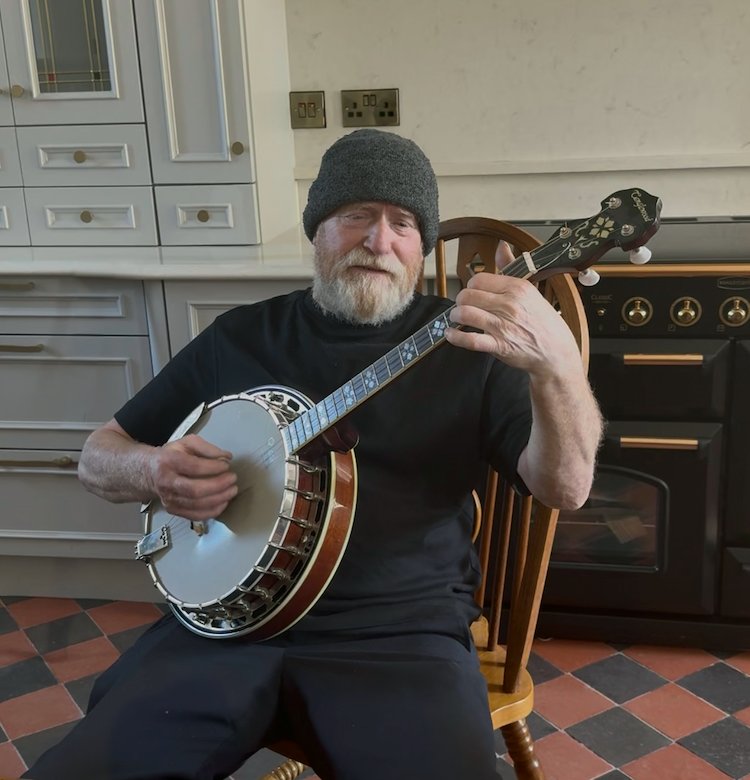
So that is the law our people kept — the law of the kindred, the year and the day, the price of a person's face, the judges who were women, the copy that followed the book as a calf follows its cow. They ground it out four hundred years ago, and thought it gone. But a story does not die so easily as a statute. We are still here. We are still telling it. And every time someone new takes their place at the table — every time the kindred gathers and decides a thing together — a little more of it comes back. Pull your chair in. There is room.