🎁  Buying this as a gift? Give the gift of belonging to an ancient Irish clan — signed by the Chief, posted worldwide.

Gift a membership →
Join the clan →
🎁  Gift someone their Irish heritage →
Documented pedigree & history

History of Clan Ó Comáin

The story of an ancient Gaelic kindred — fully evidenced

Clan Ó Comáin is one of the older Gaelic kindreds of early medieval Ireland — a sept whose documented royal pedigree, preserved in the medieval Irish genealogical manuscripts of both Munster and Connacht, is now corroborated by an unbroken Y-DNA male line in Ireland stretching back over four thousand years.

The clan's documented story spans two of the ancient royal kingdoms of Ireland. In Munster, the royal line of the Déisi Muman bore the Comáin name as early as 658 AD. In Connacht, the medieval Irish genealogists preserved a separate line of chiefs as its own named segment, Clann Comáin, within the royal pedigree of Uí Maine — the great kingdom of east Galway and south Roscommon. The clan's patron is Saint Commán, founder of Roscommon and of the ancient church at Kinvara on the southern edge of the Burren.

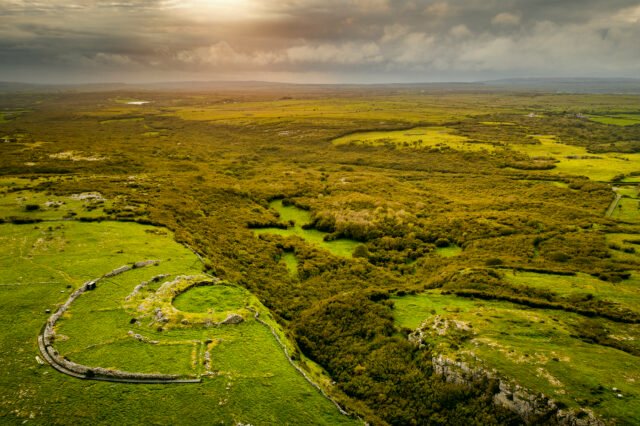
The ancestral capital, Cahercommane, stands today on the Burren in County Clare: a triple-ring stone fort, occupied through the 7th to 9th centuries, and one of the great early-medieval high-status sites of western Ireland. A short distance away rises the ceremonial mound where chiefs were formally inaugurated. Together they were the seat of a Déisi Muman sept holding the Chiefdom of Tulach Commáin on the Burren frontier — before it was overshadowed by the rise of the Dál gCais, the dynasty of Brian Boru and the O'Briens of Thomond, into which Clan Ó Comáin did not descend.

Clan Ó Comáin belongs to the older Munster peoples of Clare — pre-Dalcassian kindreds politically eclipsed by the rise of the Dál gCais in the 10th and 11th centuries. Without status in the new order, the clan's name appears in the later records most often as Comyn/Cummins rather than Ó Comáin. Edward MacLysaght, the first Chief Herald of Ireland, identified the Clare Comyns as Gaelic-anglicised rather than Norman-descended — a position now corroborated by Y-DNA testing, which places the Ó Comáin male line on a deep Irish patriline alongside other Munster families bearing Norman-era surnames.

This page presents, for the first time in a single integrated treatment, the documentary, archaeological and genetic evidence for the Ó Comáin kindred. It draws on the foundational work of Séamus Pender on the Déisi genealogies, Claire Cotter on Cahercommane, Blair Gibson on the Tulach Commáin chiefdom, and Edward MacLysaght on the Munster Comyn-anglicisation; it adds Big-Y DNA evidence not previously available; and it follows an evidence-based methodology — separating what is well evidenced from what should be treated as plausible tradition or as an open scholarly question. Two primary-source traditions — a Connacht / Uí Maine manuscript pedigree and a Munster / Déisi Muman annalistic record — are treated as parallel inheritances of the modern clan, not as a single unified line. Footnotes carry the primary sources and the principal modern scholarship.

The story belongs to all who support and cherish Irish heritage. A Gaelic clan was never the bloodline alone — a sept gathered kin and ally, soldier and friend, all who stood with the chief and the cause. Clan Ó Comáin opens its hearth to them still.

Scholarly Endorsements
Rev Dr Patrick Nugent, historical geographer and foremost authority on the Gaelic clans of Clare
Rev Dr Patrick Nugent, PhD
The foremost living authority on Gaelic clans of Clare; PhD on Gaelic clans of Clare; author of The Gaelic Clans of Co Clare & their Territories; Historical Geographer; former lecturer at the Institute of Irish Studies, University of Liverpool; now a priest
Martin Breen, historian of Clare

"Worthy of a great endorsement. The depth of scholarship and academic research is astounding. Any Gaelic clan would be proud to have this as an interrogation of their Gaelic roots — a solid foundation of erudite material on which later researchers can expand."

Martin Breen
Historian of Clare — 40 years studying the castles and history of the county; contributor to the North Munster Antiquarian Journal, The Other Clare and Studia Hibernica
Risteárd Ua Cróinín (Dick Cronin)

"Fantastic, professional and most impressive, based on proven authentic historical sources. A well researched and detailed piece of work. It covers the genealogical, ecclesiastical, historical and archaeological aspects of this ancient clan linked to both the Connacht Uí Maine and Munster Déisi royal families. Expertly compiled and designed to appeal to the more learned and academic members of the diaspora."

Risteárd Ua Cróinín (Dick Cronin)
Author of O'Dea: The Story of a Rebel Clan
Continue to the Pedigree — twelve chapters, a 30-minute read of the documentary, archaeological and genetic evidence.
Chapter I

Ancient origins

4,000 years in Ireland

Clan Ó Comáin's presence in Ireland is not measured in centuries but in millennia. Big-Y DNA testing places the direct male line on R-L21 — the defining genetic marker of the Celtic peoples of Ireland, Scotland, Wales and Brittany — within the ancient population that settled the western edge of Ireland over 4,000 years ago.1

The line sits on a deep R-Z2534 branch carried by multiple Munster kindreds, and tests negative for the L226 marker that defines the Dál gCais — the dynasty of Brian Boru and the O'Briens of Thomond. The Ó Comáin male line is firmly Munster-Clare in modern surname distribution, biologically distinct from the Dalcassian dynasty, and continuously present in Ireland since before the historical period.4

Aerial view of Cahercommane — the Burren, County Clare
Cahercommane — the ancestral capital of the Chiefdom of Tulach Commáin
Chapter II

The royal pedigree

Clann Comáin — the Ó Comáin line in the Uí Maine pedigree

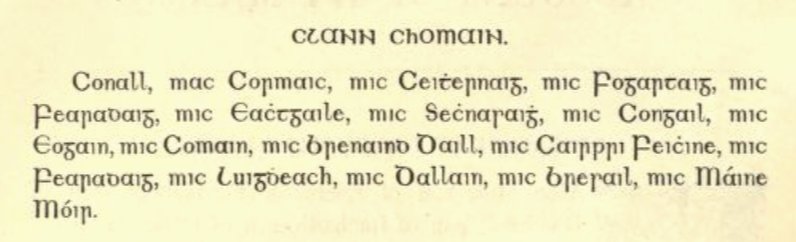
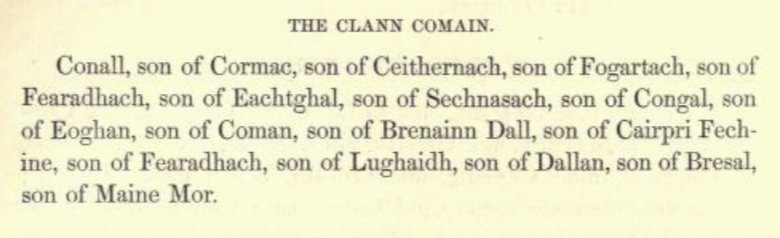
The Uí Maine pedigree of the Ó Comáin line is preserved in the Book of Lecan (Royal Irish Academy MS 23 P 2, fol. 90–92), within the Uí Maine tract. The pedigree was first published in modern critical edition by John O'Donovan as The Tribes and Customs of Hy-Many, commonly called O'Kelly's Country (Dublin: Irish Archaeological Society, 1843), and was subsequently carried into John O'Hart's Irish Pedigrees (1892). It traces the family's documented descent through the kings of Uí Maine in Connacht.5

From the manuscript
Clann Chomáin pedigree segment in Irish (Gaelic typography), from O'Donovan's edition of the Book of Lecan, 1843
Clann Chomáin — Irish text in Gaelic typography
The Clann Comáin pedigree segment, English translation, from O'Donovan's edition of the Book of Lecan, 1843
The Clann Comáin — English translation
From John O'Donovan, The Tribes and Customs of Hy-Many, commonly called O'Kelly's Country (Dublin: Irish Archaeological Society, 1843), pp. 26–27 — printing the Clann Comáin pedigree segment from the Book of Lecan.

The Kingdom of Uí Maine was established by Máine Mór mac Eochaidh around 357 AD, centred on what is now east Galway and south Roscommon. It became one of the most important provincial kingdoms of medieval Connacht, producing a remarkable number of the great Gaelic dynasties of the west of Ireland.6

Cairbre Crom, 11th King of Uí Maine (fl. c. 556 AD), is the critical ancestral figure from whom almost all subsequent Uí Maine dynasties descend. Through Cairbre Crom, the Ó Comáin family shares common ancestry with the Clancy, Kelly, Madden, Tracy, Hannan, Kenny, Colman, Egan and Larkin families — many of the great Gaelic dynasties of Clare and Connacht.7

Breanan Dall, 12th King of Uí Maine, whose death is recorded in the Annals of Ulster at 597 or 601 AD, is the earliest individually named direct ancestor of the Ó Comáin family documented in a primary historical source.8 He is the father of Coman, from whom the surname Ó Comáin directly derives.

Coman mac Breanan Dall (fl. c. 620–650 AD) is the clan-anchor of the Connacht / Uí Maine strand — the original Coman from whom "Ó Comáin," descendant of Coman, derives in the manuscript line preserved by the Book of Lecan. In the Munster / Déisi Muman strand, Pender's edition of the Déisi genealogies identifies Commán mac Cobthaig (fl. c. 600–650 AD), son of Cobthach, king of the Déisi (d. 632 AD), as the parallel and contemporary clan-anchor of the kindred whose chiefdom was seated at Cahercommane in north Clare. The two figures are roughly contemporary royal-house figures of the early 7th century, and the question of whether they represent two parallel clan-anchors of distinct lines or two names for the same dynastic founder remains the open scholarly question presented in the next chapter.

The last recorded head of the family in the manuscript is Conall O'Comáin — terminal generation of the Clann Comáin — and the pedigree is not carried forward beyond him. Meaning loss of territorial authority and patrimony, but the name continued through the subsequent centuries. John O'Hart, in Irish Pedigrees (1892), aligned Conall on chronological grounds with the 1225 grant of the Lordship of Connacht to the De Burc (Burke) family by Henry III — placing the manuscript's silence at the moment of Anglo-Norman dispossession.5a

Pedigree extract
Máine Mór mac Eochaidh (c. 357 AD)

...Kings of Uí Maine...

King Cairbre Crom (fl. 556 AD)

King Breanan Dall (d. 597/601 AD)

Coman mac Breanan Dall — name-giver

...generations...

Conall O'Comáin (1225)
Sources: Uí Maine tract, Book of Lecan (RIA MS 23 P 2, fol. 90–92, c. 1418), section headed Clann Comáin. Critical edition: John O'Donovan, The Tribes and Customs of Hy-Many, commonly called O'Kelly's Country (Dublin: Irish Archaeological Society, 1843). Subsequent compilation: John O'Hart, Irish Pedigrees (1892).
Chapter III

Kings of Déisi Muman

The Munster royal line and the coming to Clare

Alongside the Connacht royal pedigree, the medieval Irish annals record a parallel tradition of the Comáin name in Munster — specifically in the Déisi Muman (the Déisi of Munster), a distinct kingdom within the province. The Déisi Muman were not the provincial monarchs of Munster — that title was held by overlord dynasties such as the Eóganachta and, later, the Dál gCais — but a people with their own kings, their own territory, and a political standing substantial enough to be recorded repeatedly in the primary sources.

The very origin of the Déisi Muman is itself preserved in medieval Irish literature. The Old Irish narrative The Expulsion of the Déisi (Indarba na nDéisi) — one of the earliest surviving Old Irish prose texts — records that the kindred was forced out of the Tara region of Leinster, following a dispute during the reign of the High King Cormac mac Airt, and eventually settled in Munster, where they formed an alliance with the Eóganachta to secure their new territory. This is the political geography within which the kingship of Suibne mac Comáin was later exercised, and the historical background from which the Ó Comáin name descends on its Munster side.

It is important to distinguish two separate Déisi populations of early-medieval Ireland. The Déisi Muman (the Déisi of Munster) — the kindred treated in this chapter — were a southern Munster federation seated principally in what is now counties Waterford and Tipperary, with political reach extending into north Clare by the 8th century. The Déisi Tuaiscirt (the Northern Déisi) were a separate, smaller polity seated in what is now east County Clare; in the 9th and 10th centuries they consolidated their territorial position and emerged under a new dynastic name as the Dál gCais — the dynasty of Brian Boru, the O'Briens of Thomond, the MacNamaras and the O'Deas, who would dominate Clare for the rest of the medieval period. The two Déisi groups shared the older ancestral name from the expulsion tradition but were politically distinct. The Ó Comáin line of this page descends from the Déisi Muman — and definitively not from the Déisi Tuaiscirt → Dál gCais line in the north. Big-Y DNA testing of the modern Ó Comáin male line returns negative for R-L226, the defining genetic marker of the Dál gCais (see Chapter X). The line shares the deep R-Z2534 Munster substrate from which both Déisi populations descend, but follows a different downstream branch — placing the Ó Comáin patriline on the southern Déisi Muman side of the split, not the northern Dál gCais side.

Congal mac Suibne, rí na nDéisi — king of the Déisi.
Also recorded as a surety of the Cáin Adamnáin in 697.

Annals of Ulster, 701 AD

The Cáin Adamnáin — enacted in 697 AD and regarded as the first written law in Western history to protect women, children and non-combatants from violence in war — carries Congal's name (son of Suibne) among the surviving list of royal guarantors, an independent attestation of the family's standing alongside the High King of Ireland and other lesser kings.

The guarantor list of the Cáin Adamnáin names four concurrent kings of the Déisi — Congal mac Suibne mac Commáin; Andelaith, king of the Déisi Tuaiscirt; Eochaid mac Dúnchada, king of the Déisi; and Elodach, king of the Déisi of South Munster. Multiple simultaneous kings bearing the same royal title are not a contradiction but a signature of how Déisi kingship worked. It was not a single line. The Déisi were divided into different branches, each operating as a federation of septs, each governed by a chief drawn from its noble lineage, each politically significant, each electing kings in rotation. Two of the four — Congal mac Suibne and Eochaid mac Dúnchada — share the same title "king of the Déisi," showing the kingship was held across multiple concurrent branches of the confederation rather than divided cleanly between Déisi Muman and Déisi Tuaiscirt in East Clare.13b

The first king of the Déisi Muman whose obit is preserved in any chronicle tradition is Cobthach, whose death is recorded in the Annals of Inisfallen at 632 AD — Mors Cobthaig rig na nDési. Pender's three-manuscript edition of the Déisi genealogies identifies him as the father of Commán mac Cobthaig, the clan-anchor of the Munster Ó Comáin line, and grandfather of Suibne who succeeded him in the kingship two generations later.8a Suibne mac Commáin, who died in 658 AD, is recorded in the annals in the succession of kings of Déisi Muman — one of the earliest historical figures bearing the Comáin name in any primary source.99a His son Congal mac Suibne mac Commáin — the Irish patronymic mac meaning "son of" — who died in 701 AD, is named in the Annals of Ulster as king of the Déisi Muman, and stands among the named royal guarantors of the Cáin Adamnáin in 697.10

Pender's Déssi Genealogies preserves dozens of named Déisi septs, each a recognised kin-group with its own territorial identity. Kingship rotated among them — which is why Suibne's own son Congal did not succeed him directly. The kingship passed first to other septs before returning to the Commán-descended line at Congal's accession, a span of more than thirty years from father to son.1213e

The annals record the deaths of two further figures bearing the patronymic mac Commáin: Célechair mac Commáin, killed at the battle of Corcu Modruad in 704 or 705 AD — fought in the kingdom of the Corcu Mruad in north-west Clare, a neighbouring kingdom to the Chiefdom of Tulach Commáin and its capital at Cahercommane (Annals of Innisfallen, Annals of Ulster, Annals of the Four Masters), and Colmán mac Commáin, who died on the Aran Islands in 751 AD (Annals of Inisfallen) — celebrated in the martyrology Félire Óengusso as a bishop of Munster and described in Leabhar Breac as one of the four sages of Ireland. Gibson (1990) raises the possibility that the Aran Islands may have lain within the chiefdom's territorial sphere — a wider reach than is usually assumed for the Tulach Commáin sept, and one which, if entertained, would explain Colmán's death there as more than incidental.11

Their exact lineage remains an open scholarly question. Gibson (1990) proposed, on the basis of later medieval genealogical tracts, that they may have been of the Eóganacht Uí Cormaic — but Gibson himself expressly conceded that "a coherent case cannot really be made at this juncture with the scattered indications" (Gibson 1990, p. 394). Cotter (1999)12a echoes the same caution, noting the brother-relationship between Célechair and Colmán "could have been" established but is not proven. Pender's Déssi Genealogies complicates the picture further: it places the Uí Cormaic among the Déisi Muman septs themselves — "cenél úa Cormaic lasna Déssib muman", Rawlinson B 502 and Book of Lecan — suggesting this kindred sat on the boundary between the Eóganacht and the Déisi rather than belonging cleanly to either.12

Gibson's 1990 framing did not engage with the two named Déisi Muman kings above — Suibne mac Commáin (d. 658) and his son Congal mac Suibne mac Commáin (d. 701). In their presence, it is at least as plausible that Célechair and Colmán belonged to the Déisi Muman lineage carrying the Comáin name across the 7th and 8th centuries. Gibson's own characterisation of the Tulach Commáin chiefdom as "may have been the centre of a short-lived Eóganacht chiefdom" (Gibson 1990) is itself compatible with a Déisi-Muman vassal-sept reading: the Déisi Muman were Cashel clients operating within the Eóganacht-led Munster political order, and a Déisi sept holding a Burren frontier chiefdom under Eóganacht overlordship at Cashel would fit Gibson's institutional description. The broader Eóganacht–Déisi Muman relationship — overlord and subject kingdom within Munster — does not require us to choose between them: both traditions place the family firmly within Munster's royal architecture of the 7th and 8th centuries.13d

This carries a direct implication for the chiefdom site itself. Pender's evidence is that the Déisi Muman were not a single line but a federation of dozens of named septs, each with its own recognised territory and each electing kings in rotation. On that model, the Chiefdom of Tulach Commáin — adjacent to Corcu Mruad, with its capital at Cahercommane, "Commán's stone fort" — is most readily explained as the territorial seat of a Déisi-Muman sept of the Commán line: the kindred to which Suibne and Congal belonged, and within whose ambit Célechair and Colmán plausibly stood. The annalistic record of named Commán-line kings in the Déisi tradition, the Pender attestation of the Uí Cormaic among the Déisi septs, the documented Déisi political reach into north-west Clare by 765 AD, and the place-name evidence of Cahercommane and Tulach Commáin all point in the same direction: a Déisi-Muman sept holding its own chiefdom on the Burren frontier, its caput a stone fort bearing the eponymous ancestor's name.13c

The annalistic evidence from the Déisi Genealogies, written in the Book of Lecan, Rawlinson B 502, and the Book of Leinster, establishes the family's presence across both the Connacht and Munster traditions from the earliest recorded period.12 Whether these represent one family or two independent lines sharing the personal name Comáin remains an open scholarly question — both traditions are presented here honestly.

Could name-giver Coman of Uí Maine be the father of King Suibne of the Déisi Muman?

The precise relationship between these two figures — Coman mac Breanan Dall and Suibne mac Comáin — has not been directly addressed by published scholarship. The primary sources are silent on any link between them. The chronology is, however, such that a connection cannot be ruled out: Coman's floruit of c. 620–650 AD places him in the generation immediately preceding Suibne's kingship (d. 658 AD), and the Déisi king's patronymic — literally "son of Comán" — would, on the common reading, identify simply an unrelated Comán within the Déisi lineage itself.

That said, early medieval Gaelic Ireland saw kingship move between dynasties through maternal lineage, political alliance, and displacement far more fluidly than the later idealised king-lists suggest. Royal blood from one house could legitimise a man's claim in another, particularly where the mother's kin were themselves royal. The 630s saw Congal Cáech of the Cruithní claim the kingship of Tara itself — an outsider from a different province entirely — and the annals record many further examples of cross-dynastic rule that the tidy genealogical tracts would not have predicted.

Whether Suibne of the Déisi was the son of the Uí Maine name-giver — bridging the two traditions in a single generation — or the son of a separate Comán within the Déisi lineage itself cannot be resolved from the surviving evidence. It is a question the annals leave open for future scholarship, and one that the geography — Uí Maine descent in the north, Déisi kingship in the south, and the Ó Comáin chiefdom settled in north Clare between them — at least invites.

The cautious reading, on balance, is that the two traditions reflect two distinct families taking the surname from different individuals named Comán. The Y-DNA evidence presented in Chapter X bears specifically on the surviving male line and points to Munster Déisi descent — consistent with two parallel traditions rather than one. Future Y-DNA testing of documented descendants in the Connacht line could in principle resolve the question on its own ground.

Archaeologist Claire Cotter suggests that the Burren area may have been named after a sub-king named Commán, noting evidence in the annals — including the Annals of Ulster recording the 744 AD destruction of Corcu Mruad by the Déisi — consistent with Gibson's analysis of the chiefdom. The 744 entry is direct: "Foirddbe Corcu mudruadh don Deiss" — the overthrow of the Corcu Mruad by the Déisi.13

By the generation after Congal, Déisi rule had extended into north-west Clare by force of arms. The annals record the death in 765 AD of Torpad mac Cernaig, styled tigerna na nDéisi — lord of the Déisi — in the Annals of the Four Masters, and rí Corcu Mruad — king of the Corcu Mruad — in the Annals of Inisfallen. The dual title is best read as a victory title, not as evidence of Corcu Mruad sovereignty over Cahercommane. The Annals of Ulster record the Déisi destruction of the Corcu Mruad in 744 AD — "Foirddbe Corcu mudruadh don Deiss", the overthrow of the Corcu Mruad by the Déisi. Twenty-one years later a Déisi lord is also styled king of the conquered people. The chronological sequence — Déisi overthrow of Corcu Mruad in 744, Déisi-lord-as-king-of-Corcu-Mruad by 765 — makes the political direction unambiguous: the Déisi imposed kingship on the defeated Corcu Mruad, not the other way round. Cahercommane's occupation belongs to precisely this period of Déisi presence and victory in the wider Burren — the material record and the annals meeting on the same ground.13a
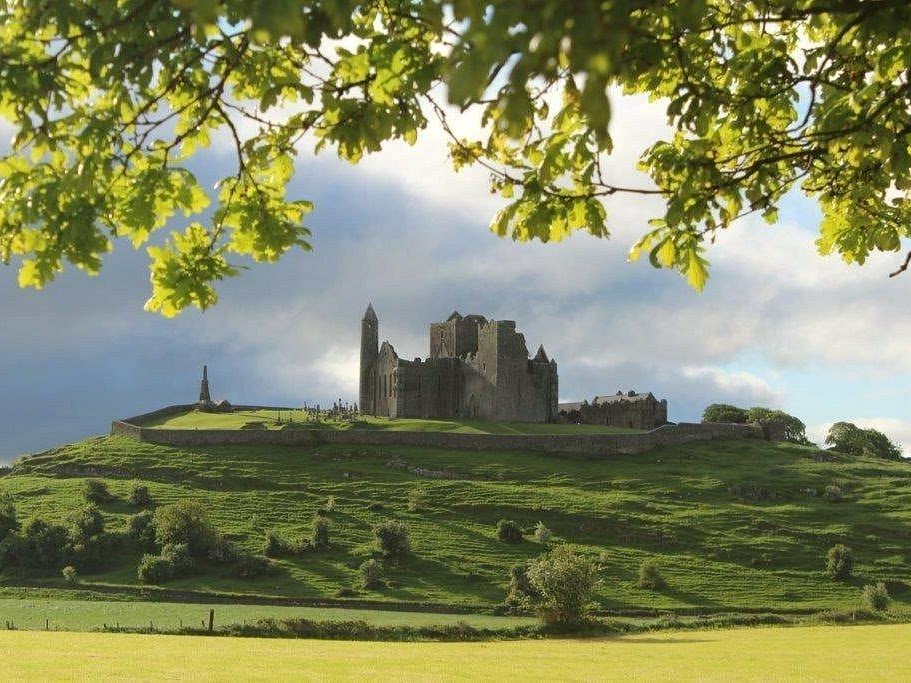
Rock of Cashel — seat of the Eóganacht, County Tipperary
Rock of Cashel, St Patrick's Rock — seat of the Eóganacht, overlords of the Déisi Muman. The Chiefdom of Tulach Commáin was probably a vassal of the Kingdom of Cashel according to historians.
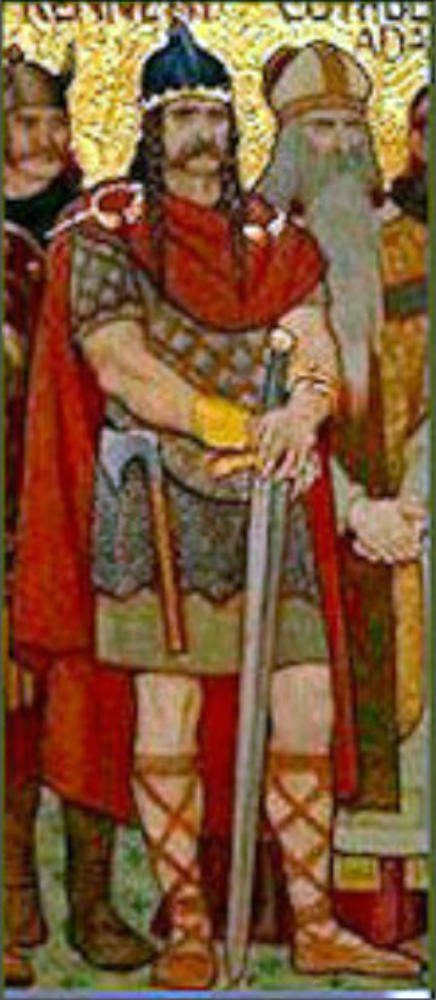
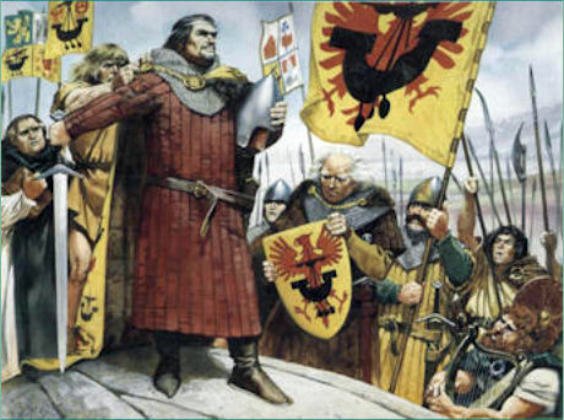
Early Irish king — Gaelic warrior nobility
A Gaelic king of the early medieval period — the world of Suibne mac Comáin, king of the Déisi Muman, 658 AD
Chapter IV

Saints and scholars

The ecclesiastical heritage of the Comáin name

Saint Commán founded Roscommon — Ros Commáin, meaning "Commán's Wood" — and the ancient church at Kinvara in County Galway, on the southern edge of the Burren. His death is recorded in the Annals of Ulster at 747 AD.14 The Dictionary of National Biography (1887) is explicit that these are one and the same person — the entry states that Saint Commán of Roscommon "also founded the church of Ceann Mara, now Kinvara" — placing both foundations with a single saint whose ministry extended from Roscommon to the shores of the Burren.15

Kinvara sits directly on the southern shore of the Burren — the very heartland of the ancient Chiefdom of Tulach Commáin — placing the saint's foundation within sight of the ancestral capital Cahercommane. Roscommon town and county bear the saint's name to this day, making Saint Commán one of the most geographically enduring of all Irish saints.

Colmán mac Commáin, whose death on the Aran Islands is recorded in the Annals of Inisfallen at 751 AD, is called one of the four sages of Ireland — a remarkable designation placing a member of the Comáin family among the great learned men of early medieval Ireland.16

Gilla Cómáin mac Gilla Samthainde (fl. c. 1072 AD) was a celebrated medieval Irish poet whose works were incorporated into the Lebor Gabála Érenn — the Book of Invasions — one of the great manuscripts of Irish literature.17

The family name is also preserved in Ferchess mac Commán — a fian warrior and poet in early Irish mythology, a member of the household of King Ailill who ruled southern Ireland, recorded in the ancient sagas as having avenged the death of Ailill's son.18

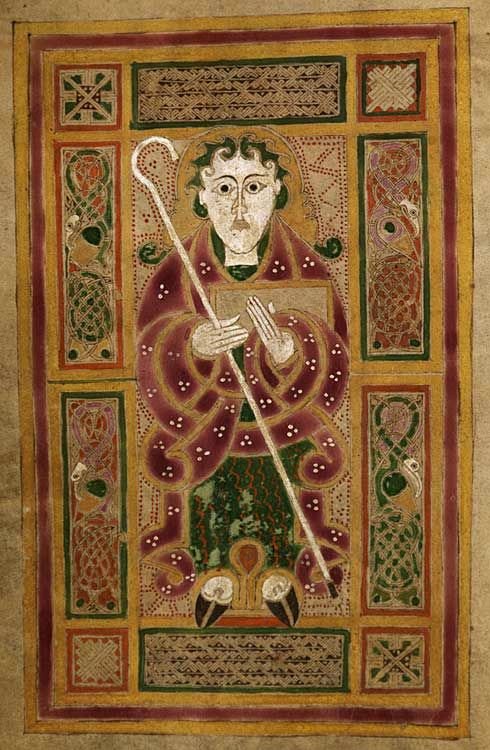
Early Irish saint — 9th century Irish manuscript illumination in the insular tradition
Saint in the insular manuscript tradition · 9th century Irish
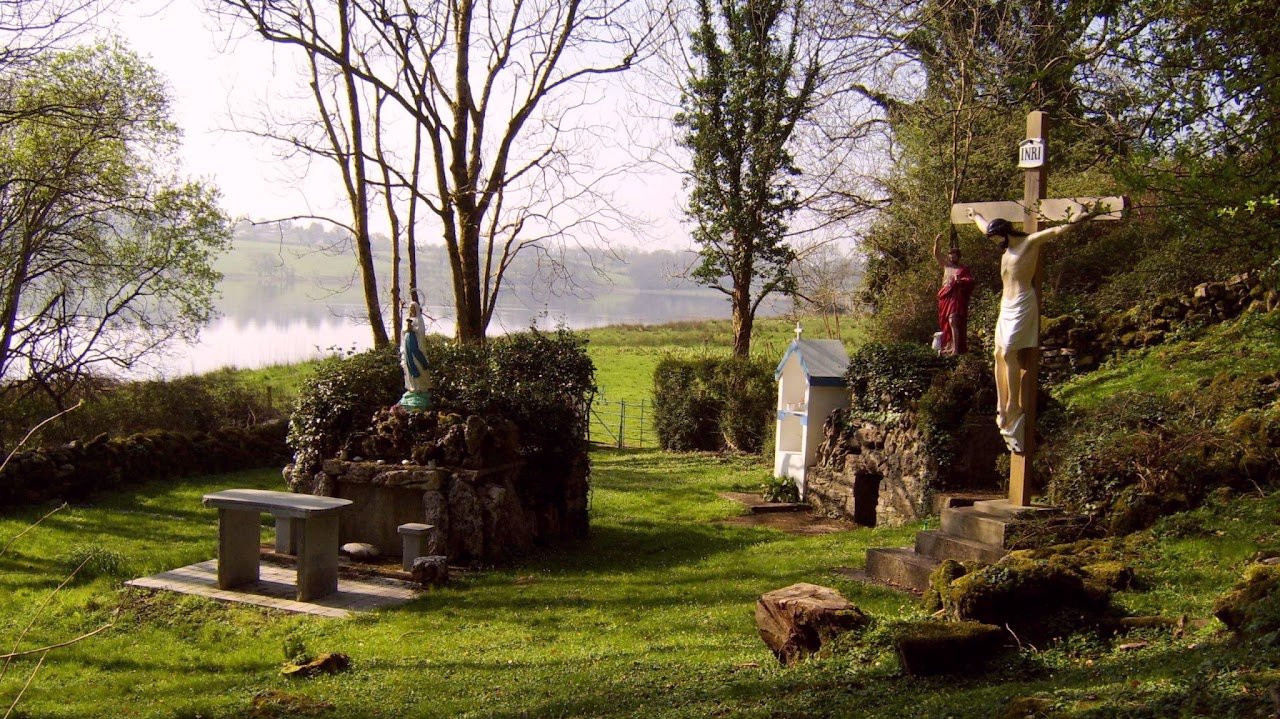
Holy Well of St John the Baptist, Newhall Estate
Chapter V

The Chiefdom of Tulach Commáin

An ancient Gaelic chieftain line in the Burren

The Chiefdom of Tulach Commáin — "The Mound of Commán" — was the principal political entity of the Ó Comáin sept in early medieval Clare. The chiefdom occupied territory in the Burren, the extraordinary limestone plateau of north Clare, and its capital was the great triple ring stone fort of Cahercommane.19

Three Kings of the Déisi Muman anchor the chiefly kindred in successive generations — Cobthach (d. 632 AD), his grandson Suibne mac Commáin (d. 658 AD), and Suibne's son Congal mac Suibne (d. 701 AD, guarantor of the Cáin Adamnáin in 697). Congal held both the kingship of the Déisi Muman and the chiefship of the sept itself — the two titles concentrated in one man, as was standard when a clan chief, in a federation of dozens of Déisi Muman septs, was elected to the over-kingship. After Congal's death in 701, the sept's chiefly line passed laterally to his brother Dubluige mac Suibne, and continues by tanistry — not by direct father-to-son descent — through Conamla, Con dinisc, and Faelchu mac Con dinisc, into the late 8th to 9th century (estimated), contemporary with Cahercommane's peak occupation phase. By clan tradition, this is the chiefly kindred that held the Cahercommane chiefdom.29

According to the Cambridge University Press analysis of the chiefdom by D. Blair Gibson, Tulach Commáin was an important but not dominant chiefdom within the broader political landscape of the Kingdom of Cashel, controlling or heavily influencing large parts of the Burren in the 8th and 9th centuries.20

The 1585 deed of Queen Elizabeth I references "Tullagh Coman" as a place name — confirming the persistence of the Comáin name in the Burren landscape into the Elizabethan period, centuries after the chiefdom had faded from political life.21 Thomas Johnson Westropp, the Irish antiquarian and president of the Royal Society of Antiquaries of Ireland, documented the site in his early 20th century surveys, noting that the personal name Commán was likely the root of both the fort and the townland names.22

As late as the 19th century, Tulach Commáin — the burial and inauguration site of the chieftains — was regarded as a supernaturally potent spot by local tradition. A local told an archaeologist: "it has more fairies than all the other forts of the hill."23

Scholarly recognition: the 1990 UCLA doctoral dissertation

In 1990, the American anthropologist Dr. David Blair Gibson submitted his doctoral dissertation to the Department of Anthropology, University of California, Los Angeles. His committee chair was Prof. Timothy Earle — one of the foremost authorities on chiefdom archaeology. The dissertation's title alone is significant: Tulach Commáin: A View of an Irish Chiefdom.GS

Gibson reconstructed, on archaeological and territorial grounds, a north-Clare polity centred on the stone fort of Cahercommane (Cathair Commáin — "the Dwelling of Commán"). Its companion prehistoric mound, Tulach Commáin ("Mound of Commán"), stands a short distance away and gives its name to the townland of Tullycommon, still shown on Ordnance Survey maps. Both the settlement and the mound bear Commán's name. Gibson identified the mound as the probable inauguration cairn of the chiefdom's chiefs — the place where each new chief was invested with office, in the ancient Gaelic kingship tradition.

Gibson reconstructed Cahercommane as the political centre of an early medieval chiefdom whose name and territorial extent are preserved in the local placenames Cathair Chommáin and Tulach Commáin. His work was later expanded into the Cambridge University Press monograph From Chiefdom to State in Early Ireland (2012). The 1990 dissertation remains the foundational scholarly treatment of the chiefdom — and it carries Commán's name in its very title.

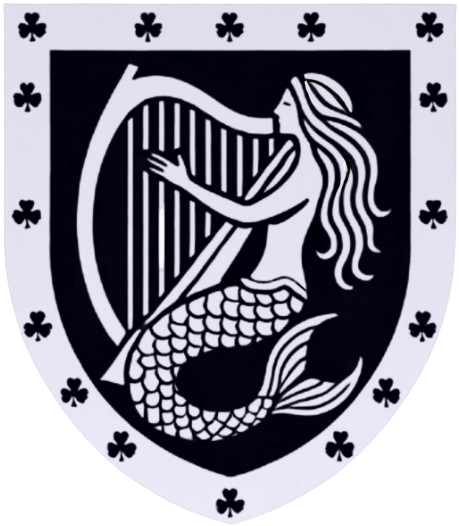
Clan Ó Comáin shield
Clan Member Library

Private access to primary scholarship

Members of Clan Ó Comáin receive private access to scanned primary scholarship on the clan — including Gibson's full 1990 UCLA doctoral dissertation Tulach Commáin, his 2008 peer-reviewed journal article on Irish chiefdoms, and Cotter's 1999 Discovery Programme re-assessment of Cahercommane Fort.

These documents are not freely available elsewhere online. The clan members' library preserves and makes them accessible for genealogy and heritage research.

Apply for Membership →
Already a member? Sign in →
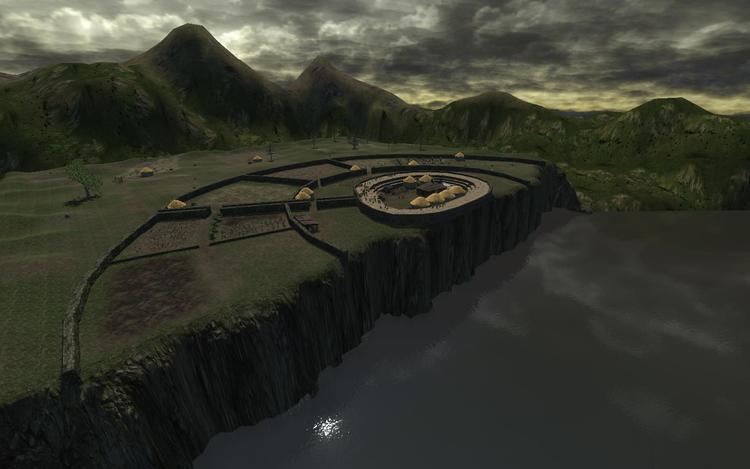
Cahercommane 3D remodel
3D remodel of Cahercommane at the height of the chiefdom
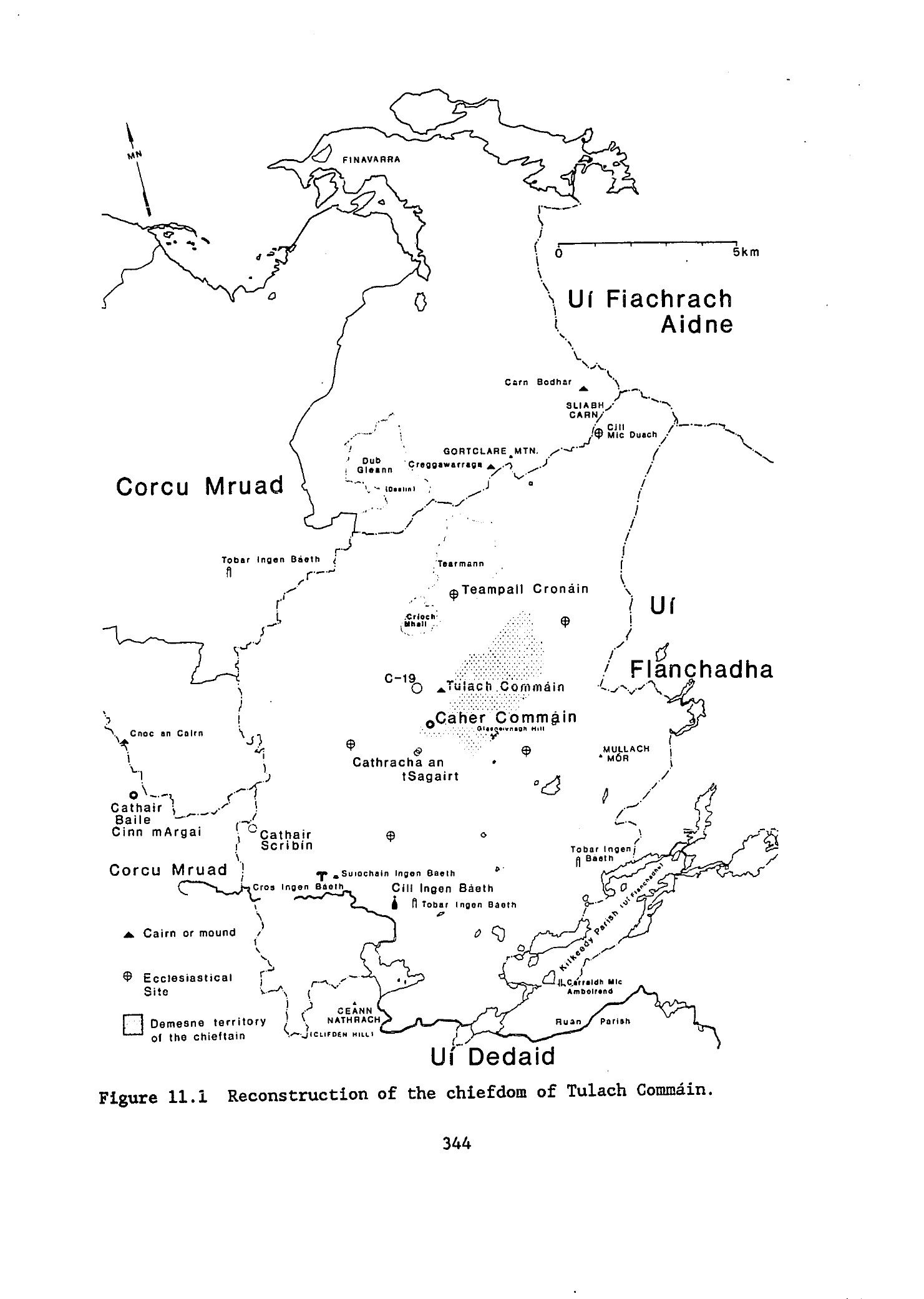
Reconstruction map of the Chiefdom of Tulach Commáin, bordered by Corcu Mruad, Uí Fiachrach Aidne, Uí Flánchadha, and Uí Dedaid — with Caher Commáin and the Mound of Commán at the centre
Reconstruction of the Chiefdom of Tulach Commáin — bordered by Corcu Mruad, Uí Fiachrach Aidne, Uí Flánchadha, and Uí Dedaid, with Caher Commáin and the Mound of Commán at the centre and the chieftain's demesne territory shaded. Source: Gibson, D.B., Tulach Commáin: A View of an Irish Chiefdom, UCLA Ph.D. dissertation, 1990, Figure 11.1, p. 344.
Chapter VI

Cahercommane

The ancestral capital — archaeology and place name

Cahercommane — Cathair Chomáin, "Fort of Commán" — is a triple ring stone fort on the south-east edge of the Burren, in Kilnaboy, near the village of Carran in County Clare. The inner wall alone used an estimated 16,500 tons of stone, the outer wall measuring approximately 350 feet east-west by 245 feet north-south. The fort sits dramatically on the edge of an inland cliff, with three concentric walls reaching to the cliff edge.24

The site was excavated in 1934 by the Third Harvard Archaeological Expedition, led by Hugh O'Neill Hencken, in a six-week excavation that established the fort as the capital of an early medieval chiefdom. Archaeological evidence found of settlement dating back to the 5th and 6th centuries, with the fort itself built in the 8-9th century. A silver brooch found in one of the souterrains — similar in design to the Tara brooch and now held in the National Museum of Ireland — confirms occupation in the 9th century AD.25

In his 1938 report, Hencken retained the spelling Cahercommaun despite the Ordnance Survey map showing Cahircommane — "in spite of possible linguistic objections" (Hencken 1938, 3). Cotter (2012, p.83) confirms Westropp used both "Cahircommane or Cahercommaun." Both agreed the name derived from the personal name Commán. Cotter establishes that the valley containing Cahercommane, Cashlaun Gar and Glencurraun "suggests strongly that the second element of the fort's name at least includes the personal name Commán," and that the element -aun derives from Irish -án, not -an(n).26

Cotter (2012, p.90) considered the place-name evidence: she suggested Cahercommane "might have gained its name" from a Uí Fidgeinti sub-king named Commán — or, with less weight, from a Ciarraige sub-king named Cumann — and that this identification "suggests a historical horizon for the construction and use of some of these forts at a particular period." From at least the 7th century, north Clare was contested between Corcu Modruad, the Uí Fidgeinti and the Connachta. Cotter also identifies the 1585 deed in The Irish Fiants of Elizabeth I — referencing "Dermod O'Flanygan of Cahirekamon" and "Tullagh Coman" twice — as the earliest documentary mention of both names.26

It is worth being clear on the political geography. Cahercommane sits on the frontier with the Corcu Mruad — not within their territory. The modern barony divisions preserve this distinction: Cahercommane lies in the parish of Kilnaboy, in the Barony of Inchiquin — the historic Uí Fhearmaic / Cenél Fearmaic territory — while the Corcu Mruad name is carried forward in the separate Barony of Corcomroe to the north-west of the county. Gibson's mapping of the early-medieval polities of north Clare (Gibson 1990, Fig. 11.1) places the Corcu Mruad territory in the north-west of the modern county, and the Tulach Commáin chiefdom — within which Cahercommane stands — on the south-eastern edge of the Burren, separately constituted. The two were neighbouring kingdoms across a frontier, not one inside the other. The annal record corroborates this directly: the Annals of Ulster's 744 AD entry recording the Déisi destruction of the Corcu Mruad ("Foirddbe Corcu mudruadh don Deiss"), and the 765 AD entry showing Torpad mac Cernaig holding both tigerna na nDéisi and rí Corcu Mruad as a victory title (see Chapter III), are not consistent with Corcu Mruad sovereignty over Cahercommane in this period.26a

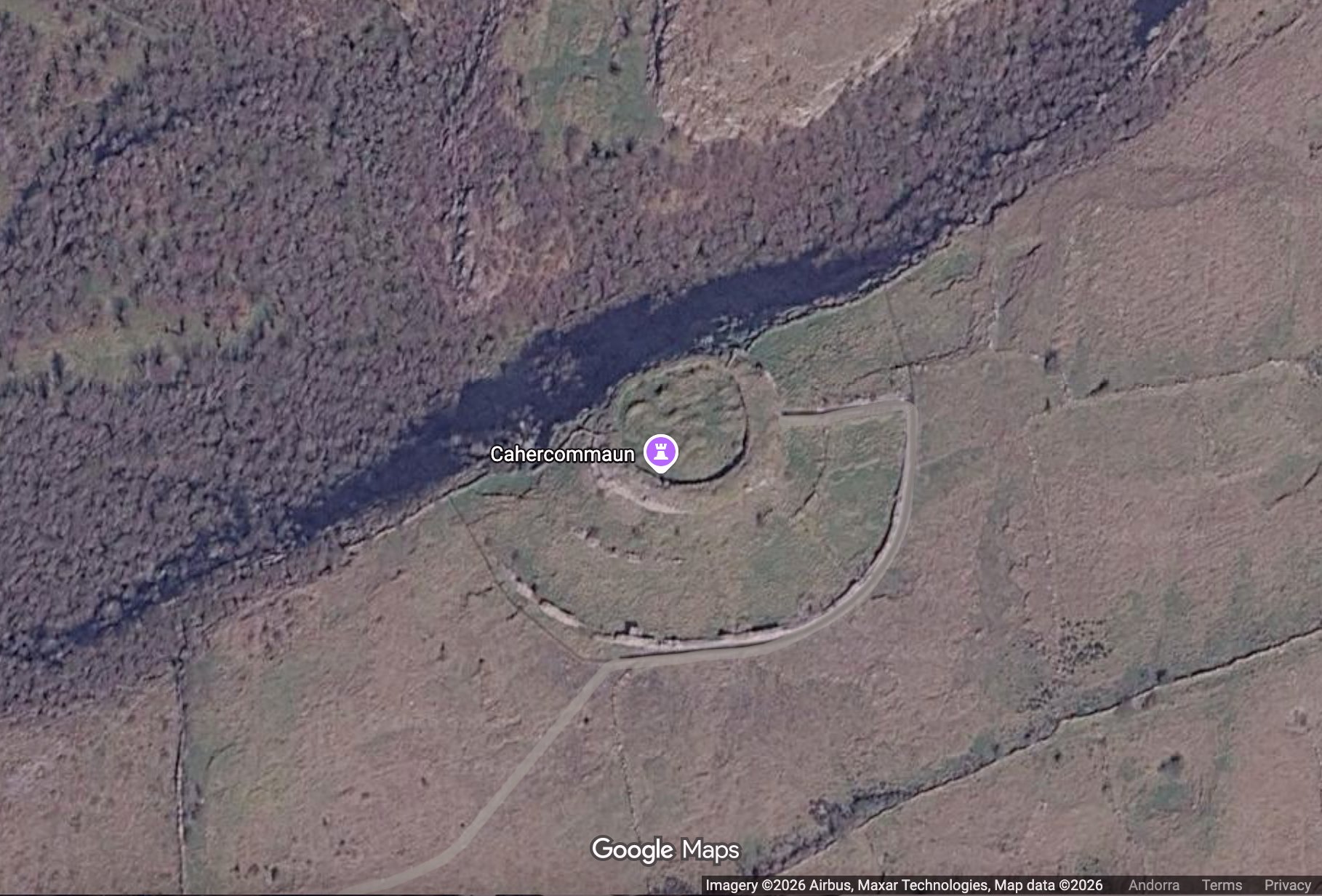
The fort's defensive geography is itself consistent with its frontier position. Cahercommane faces north-west defensively — the orientation is plainly visible in the satellite image. The inner stone fort sits on the south-eastern edge of the cliff feature, with the cliff face dropping sharply away to the north and north-west, while the multivallate ringed earthworks extend south-east from the cliff edge into level ground — into the Tulach Commáin chiefdom's own territory, where supplies, allies and retreat lay. The natural cliff face defends the north-western approach: the direction in which Corcu Mruad core territory sat per Gibson's mapping. The orientation is that of a fort built against the Corcu Mruad to the north-west, not one of their internal strongholds facing outward away from their own core territory.

Cahercommane satellite view from Google Maps showing the fort facing north-west defensively, with the cliff face dropping away to the north and north-west and multivallate ringed earthworks extending south-east into Tulach Commáin chiefdom territory
Cahercommane (Cathair Commáin) — satellite view via Google Maps. The fort faces north-west defensively: the inner stone fort sits on the south-eastern edge of the cliff feature, with the cliff dropping away to the north and north-west, and the outer ringed earthworks extending south-east. The defended (cliff-protected) approach faces the Corcu Mruad core territory mapped by Gibson 1990 (Fig. 11.1). Imagery: Google Maps / Airbus / Maxar Technologies, 2026.

There are no signs of occupation past the 10th century — the chiefdom appears to have dissolved, with its territory passing under the expanding Dál Cais confederacy under the O'Brien dynasty to the Ó Dea of Cenél Fearmaic, who would hold the Inchiquin territory under O'Brien overlordship. The site itself was abandoned, but the name survived, embedded in the landscape in both the place name Cahercommane and the nearby townland of Tullycommon (Tulach Commáin).27

The name — two spellings
Cahercommaun
Used by Hencken (1938) and the Harvard expedition. The standard modern archaeological spelling.
Cahircommane
Used on the Ordnance Survey 6-inch map. Noted by Hencken as an alternate form.
Cathair Chomáin
The original Irish: "Fort of Commán" — the personal name of the chief from whom both the fort and the chiefdom took their name.
Chapter VII

The fall of a chieftain line

Dispossession and the documentary gap

By the 10th century, the Tulach Commáin chiefdom had been eclipsed. Cahercommane shows no signs of occupation past this period. The Dál gCais — the rising power that would establish the Kingdom of Thomond — consolidated their dominance over Clare across the 10th and 11th centuries, unifying the county under a new overlord-vassal architecture. With the whole of Thomond brought under a single overlordship, the older internal frontiers of north Clare dissolved, and the Tulach Commáin frontier fort lost its institutional function. The family continued in the region but in reduced status under the new political order.

In Connacht, two centuries later, the Uí Maine line ended in formal dispossession. Conall O'Comáin is the last recorded head of the family in the Uí Maine royal pedigree of the Book of Lecan; after his name, the manuscript line is not carried forward — consistent with his dispossession in 1225 when King Henry III granted the Lordship of Connacht to the Anglo-Norman De Burc (Burke) family.28 Whether the Munster chiefs of Tulach Commáin and the Connacht Uí Maine line represented one family or two distinct lineages remains an open scholarly question. What is clear is that within four centuries, both branches had lost their territorial authority — to different conquerors, in different decades, under the same broad pattern of Gaelic chiefly displacement.29

From the 13th century into the post-medieval period, the family appears in scattered annalistic and documentary references, but no continuous territorial chiefly history is preserved — a pattern common to dispossessed Gaelic kindreds across the late-medieval centuries. Their continuity was preserved instead in name and place, in scattered landholding records, and ultimately in the genetic record — the threads of the post-1225 story picked up in the chapters that follow.

The gap may be bridged in future through the Registry of Deeds (from 1708), the Conyngham estate papers, the Civil Survey of 1654, the Hearth Money Rolls of 1664, and the Fiants of the Tudor Sovereigns — all sources that may yet yield documentary evidence of the family in the intervening centuries.

The Anglo-Norman invasion of Ireland
The Anglo-Norman conquest — the force that dispossessed Conall O'Comáin and ended centuries of chiefly rule in 1225
Chapter VIII

The name endures

Documentary traces across five centuries

Clan Ó Comáin belongs to the older Munster peoples of Clare — those who held territory before the rise of the Dál gCais in the 10th and 11th centuries. The Dalcassian consolidation reorganised the political map of Clare under O'Brien overlordship, with the older native kindreds — Corcu Mruad and Corcu Baiscinn — continuing as named ruling lines under that suzerainty (the O'Loughlin Princes of Burren, the O'Connor of West Corcomroe, the McMahons of Corcabaskin) into the 17th century.29a The Déisi Muman frontier septs who had pushed into Clare in the 8th century — including the Tulach Commáin sept holding Cahercommane — had a different fate: their fortified frontier seats were abandoned in the 10th century, consistent with the dissolution of the Burren frontier as the political map reorganised. The Coman line continued in the region, recorded in the later Clare landscape primarily under anglicised forms. For the dispossessed Ó Comáin, the choice of name itself became strategic: under Dalcassian and later Anglo-Norman rule, the family came to be recorded most often as Comyn in English-speaking contexts — a recognised armigerous Norman-Irish name phonetically aligned with the Gaelic original — opening legal, business and social standing that the Gaelic form alone did not, while the family retained the Gaelic form privately within the Irish-speaking community. This is why the clan's name in the later Clare record appears most often under the anglicised form Comyn — and only rarely, if at all, under the Irish-language Ó Comáin. The identification is preserved directly in John O'Hart's Irish Pedigrees (1892), where the Ó Comáin descent appears under the heading "The Stem of the Comyn Family," with the explicit subscription that "Breanan Dall... was the ancestor of O'Comain; anglicised Coman, and Comyn" — three forms of the same name in O'Hart's own description.

Despite the documentary gap following the 1225 dispossession, the Comyn name continues to appear in Clare and Munster records across the subsequent centuries. A family of Comyn is recorded in Limerick by c. 1440, with Sir William Comyn, knight, documented as ancestor of the Comyns of Corcomroe and Kilcorney — the Kilcorney family being seated in the Barony of Corcomroe in the Burren, the very heartland of the ancestral chiefdom. A pedigree of this family was registered with the Ulster King of Arms in 1748.30

An Elizabethan deed of 1585 references "Tullagh Coman" as the name of a townland — preserving the ancient Chiefdom of Tulach Commáin in the legal record of the English administration four centuries after the dispossession.31

In 1619, James Comyn received Doonbeg Castle from Daniel O'Brien — evidence that a family bearing the Comyn name retained sufficient standing in Clare to receive a castle grant from the O'Brien lordship, centuries after the formal loss of their chiefdom territory.32

Around the middle of the 17th century, an Ulster King of Arms manuscript records arms for the name "Comen" on page 83 of the volume, within an alphabetical sequence of C-surnames. Comen is not a documented Irish surname and appears in none of the standard registers (MacLysaght, Woulfe, O'Hart); the most plausible reading is that the scribe misspelt or idiosyncratically rendered one of the documented 17th-century anglicisations of Ó Comáin — most likely Coman or Comyn. With the Y-DNA evidence corroborating MacLysaght's reading of the Clare Comyns as Gaelic-anglicised, the entry is most plausibly armigerous recognition of the Clare Coman line itself in the heraldic record of the period — rather than an unrelated Norman family. For the fuller heraldic discussion, see the crest page.32a

Pender's Census of 1659 records "Comane &c" — 11 families — in the Barony of Tulla, County Clare: the first confirmed post-medieval population record placing the family in Clare following the centuries-long documentary gap.33

Edward MacLysaght, the first Chief Herald of Ireland and author of Irish Families (1985), confirmed that the name appears as Ó Comáin in Munster — "whence come the majority of present day Cumminses (also called Commane) now found in Counties Tipperary and Cork."34 Big-Y testing of the modern Ó Comáin male line confirms MacLysaght's reading from an independent direction: the patriline sits in a deep Irish Y-line cluster also carrying Norman-era surnames such as Burke and Walsh — the documented pattern of Gaelic Irish kindreds who adopted Norman-era surnames after the 12th century. The name Na Comáin is confirmed by Logainm.ie as a townland in the Iveragh barony of Kerry, in the Gaeltacht area of Dromod parish, confirming the family's geographic distribution across the Munster seaboard.35

A historical note on the bilingual record. In the late-medieval and early-modern period, Irish families typically operated bilingually — using the Gaelic form of the name within the Irish-speaking community, while using an English-spelt variant when travelling into Limerick or Galway for trade, when dealing with English-speaking officials, or when their name was recorded in court, parish or property documents. The official record therefore captures the family overwhelmingly under its English variants — including Comyn, Coman, Commane, Cummins and Cummane — rather than under any Gaelic form. Cummins is widespread today in Counties Cork and Tipperary, where MacLysaght records the majority as deriving from the Munster Ó Comáin line; Comyn predominates in Clare; Commane is found across both Munster and Connacht. The anglicisations all derive from the same Gaelic name, and reflect different scribal conventions and phonetic choices across different regions and periods.

It should be acknowledged that not every Irish Comyn family descends from the Gaelic Ó Comáin line. The Comyn name was also borne by Anglo-Norman settlers in Ireland — including descendants of the Comyns of Buchan in Scotland — who arrived in the 13th and 14th centuries. MacLysaght's identification of Clare and Munster Comyns as Gaelic-anglicised is a regional finding, not a blanket claim about all Irish Comyns. For any individual Comyn family today, Y-DNA testing remains the definitive way to confirm whether the patriline descends from the Gaelic Ó Comáin lineage or from one of the Anglo-Norman Comyn lines.

Clan Ó Comáin shield
Confirm your lineage

DNA and family tree specialist for clan members

Members of Clan Ó Comáin receive private access to a DNA and genealogy specialist who can help confirm whether your patriline descends from the Gaelic Ó Comáin lineage or from one of the Anglo-Norman Comyn lines — and trace your family tree against the documented Clare and Munster records.

The clan looks after its own. We guide you through the Y-DNA testing options, interpret the results, and place your line in the context of the clan's documented genealogy.

Apply for Membership →
Already a member? Sign in →
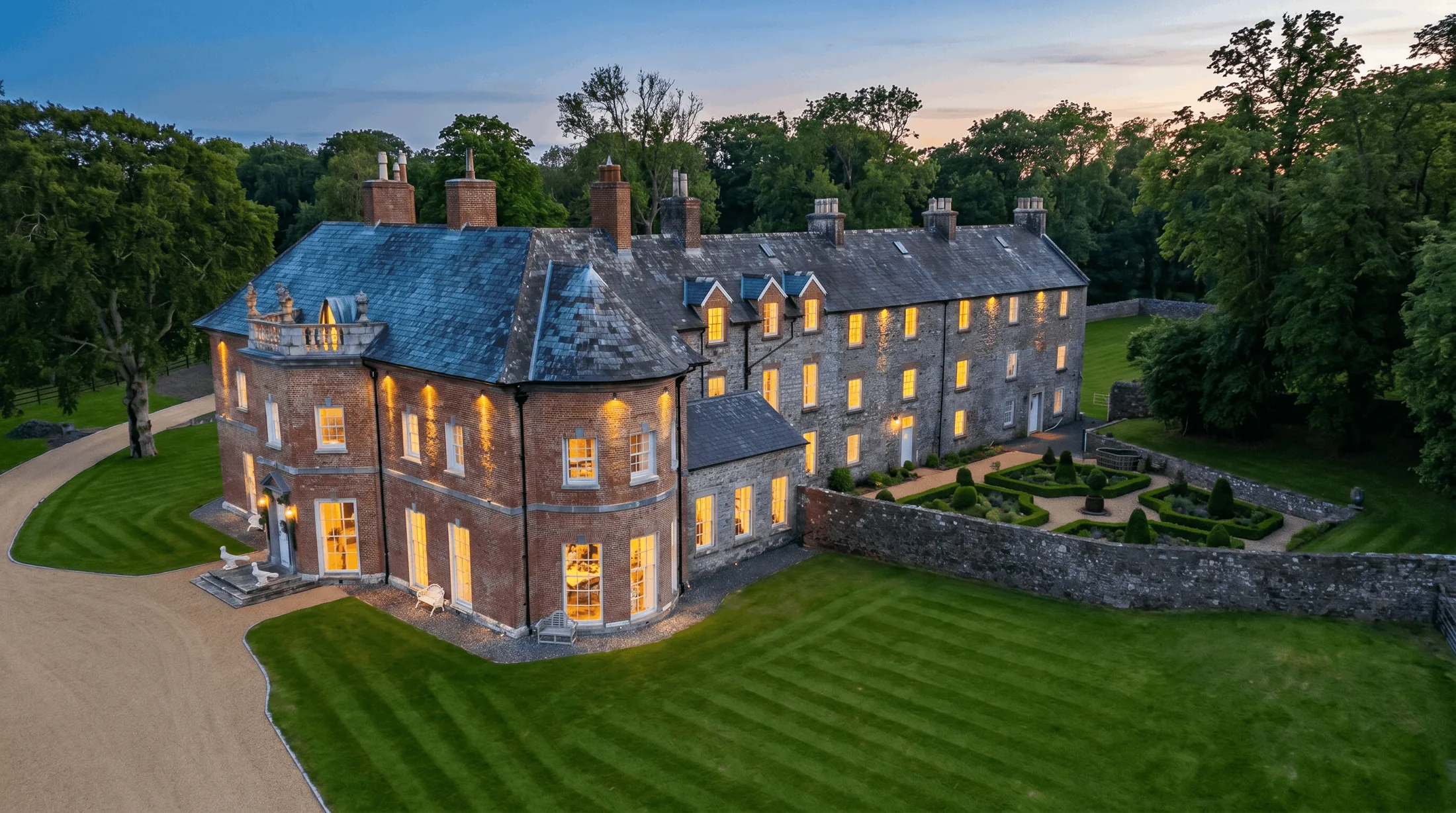
Newhall House at dusk — clan seat
17th-century Newhall House — the modern clan seat, within the ancient landscape of the chiefdom
Chapter IX

The modern record

From the Tithe Books to the present

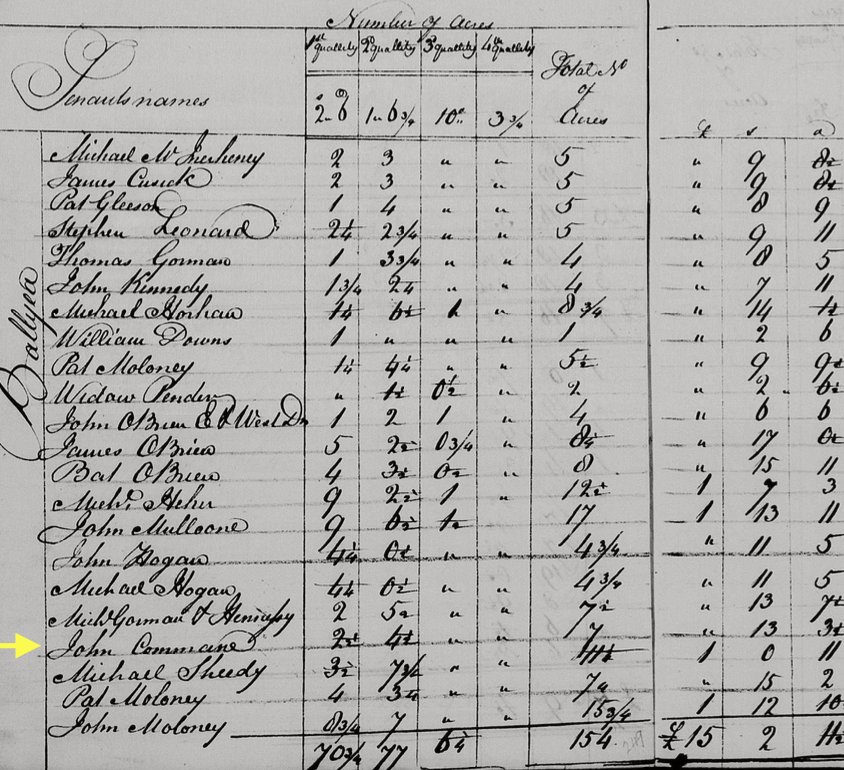
Among the individuals identified in the documented modern Commane line is John Commane, of Newhall, recorded as a tenant in Ballyea townland, Killone parish, County Clare in the Tithe Applotment Book of 1828 — Ballyea and Killone lying in the same immediate territory as Newhall, marking a subtle but resonant historic connection to the clan's present seat. His neighbour in the same townland was Mich'l Hehir — a remarkable echo across more than a millennium of the two ancient Clare families of the Burren sharing territory.36

Tithe Applotment Book entry showing John Commane of Ballyea, Killone parish, 1828
Occupiers of land Ballyea, Parish of Killone 1828. John Commane is recorded with 6¾ acres; his neighbour in the same townland is Mich'l Hehir.

John Commane is absent from Griffith's Valuation of 1855 for Killone parish. A common scholarly reading is that he either died during the Great Famine of 1845–1852 or emigrated in the Famine period — as so many Clare families did. A Commane Road in Baldwinsville, New York (Onondaga County) testifies to Famine-era emigration of the family to upstate New York, where the family left a road name as their legacy in the American landscape.37

It is also worth noting, however, that absence from a 19th-century government survey is not in itself proof of death or emigration. A third possibility, preserved in the family's own oral tradition, is that some Commane households were simply not recorded. Mistrust of British administrative surveys ran deep among the Gaelic tenantry of Clare — born of fear of eviction, rent increases, conscription, and the long memory of the Penal Laws — and it was not uncommon for heads of household to quietly instruct their families not to give their names when officials came to the door. Stories of this practice survive in the living Commane line to the present day. Continuity in place therefore remains a possibility alongside the death and emigration readings of the 1855 record.

The Clare Comyns — erenaghs, poets and French nobility

MacLysaght's Irish Families (1972) records a branch of the Clare Comyn family of particular distinction. Michael Comyn (1688–1760), of Kilcorcoran, County Clare, was one of the most celebrated Gaelic poets of the 18th century, composing in the classical Irish tradition at a time when the Gaelic literary order had been largely destroyed by the Penal Laws.41

His son, Michael Comyn (b. 1704), followed the path of the Wild Geese — the Irish Gaelic soldiers, scholars and families who fled into exile on the Continent after the Jacobite defeat of 1691. He emigrated to France, where he was accepted as one of the nobility of France — a formal recognition of his Gaelic aristocratic lineage by the French court, which maintained a register of Irish noble families in exile throughout the 18th century.42

His grandson, John Francis Comyn (1742–1793), was guillotined as an aristocrat during the French Revolution — a Clare family that had risen from the stone forts of the Burren to the aristocracy of France, and was destroyed in the Terror that swept that aristocracy away. The arc of this single line — from a 7th-century Gaelic kingship to a 1793 Parisian scaffold — encapsulates the full trajectory of the Gaelic world in three centuries of exile.43

David Comyn (1853–1907), another Clareman of the name, was active in the cultural movements of the late 19th century that led to the formation of the Gaelic League — the organisation that would become the principal vehicle of the Irish language revival and a direct precursor to the independence movement. The Clare Comyn tradition of letters, from the 18th-century poet to the Gaelic League activist, represents a continuous thread of Gaelic cultural commitment across two centuries.44

MacLysaght also records that the family were historically erenaghs — hereditary custodians of church lands — of the church of St. Cuimín Fada in Connacht, with the parish of Kilcuimin on the western shore of the Bay of Killala named after the saint. This ecclesiastical custodianship placed the family among the hereditary religious aristocracy of Connacht.45

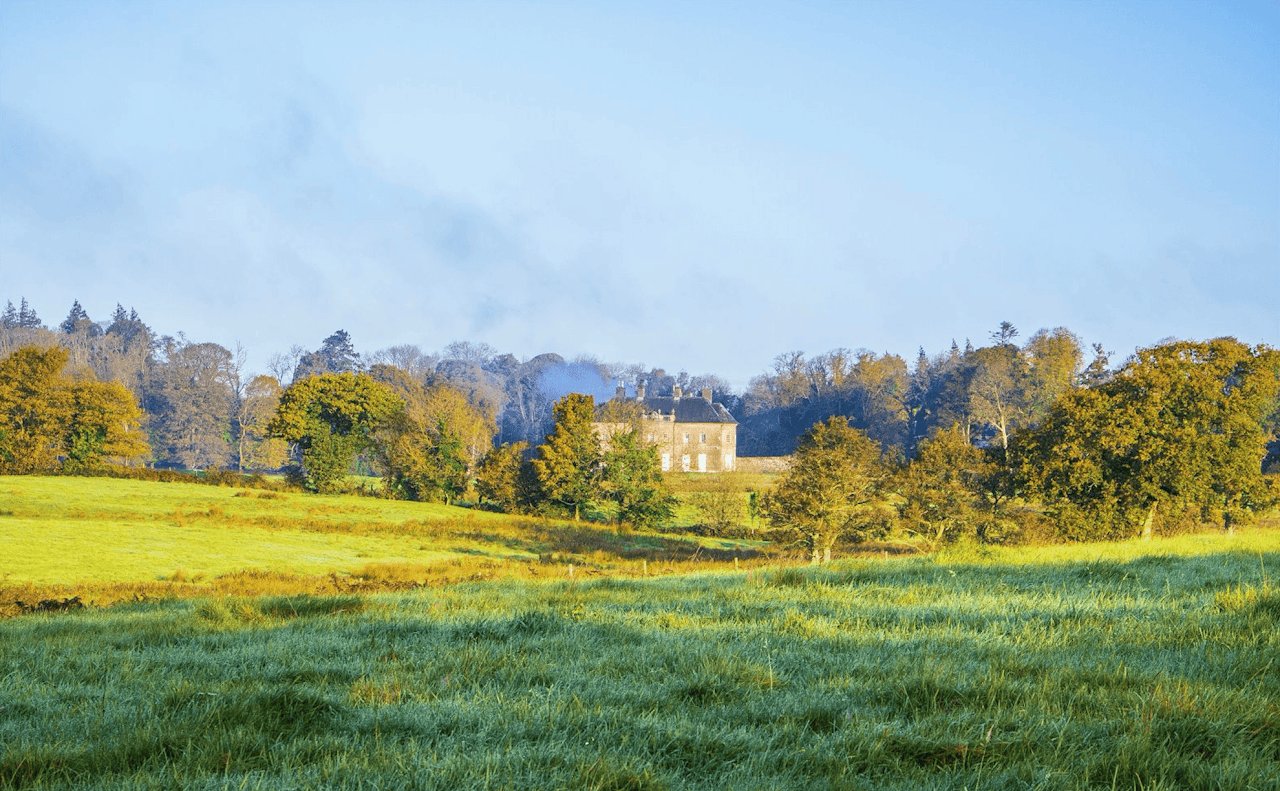
Newhall House & Estate in morning light, County Clare
17th-century Newhall House & Estate, Newhall, Co. Clare — clan seat of Clan Ó Comáin
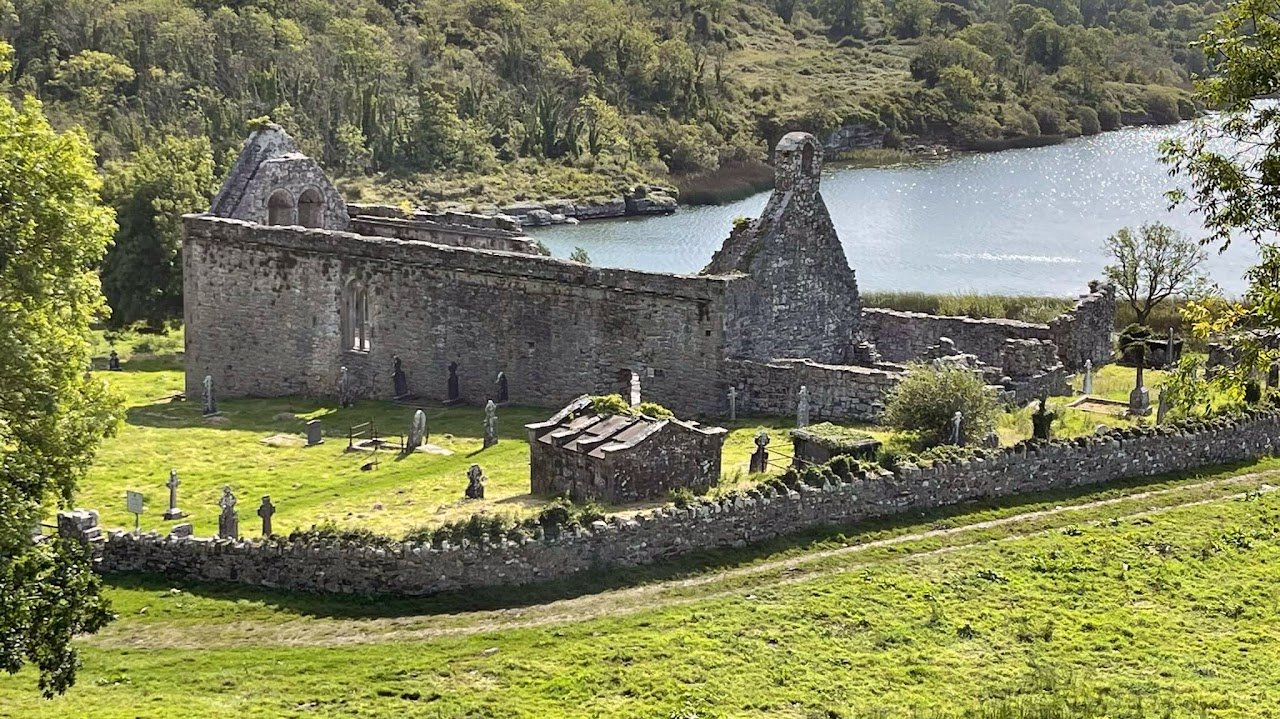
Killone Abbey with lake, Newhall Estate
Killone Abbey — 12th century Augustinian priory, Newhall Estate
Chapter X

DNA — 4,000 years confirmed

The genetic record of the Ó Comáin male line

Big-Y testing of the Ó Comáin male line confirms an unbroken direct male-line descent in Ireland stretching back over 4,000 years — direct genetic evidence supporting a documented royal pedigree that reaches into the early-medieval annals. The patriline carries R-L21, the defining genetic marker of the Celtic peoples of Ireland, Scotland, Wales and Brittany, on a deep R-Z2534 branch of the deep Munster substrate.1

The decisive finding is the absence of R-L226. L226 is the genetic marker that defines the Dál gCais — the dynasty of Brian Boru and the O'Brien, MacNamara and O'Dea families of Clare. Direct testing of the Ó Comáin male line returns negative for this marker. This is the genetic confirmation that the clan belongs to the older Munster substrate of Clare, biologically distinct from the Dalcassian lineage that came to dominate the county from the 10th century onwards.4

The wider match cluster is also consistent with attribution to the Déisi Muman — the federation in which the Comáin name appears as kings in the 7th and 8th-century annals. The closest living Y-DNA match — a Moylan, an Irish surname concentrated in Clare — supports the same Clare-Munster geography.3

The Big-Y match cluster also corroborates the Comyn-anglicisation pattern documented in Chapter VIII. The Ó Comáin patriline sits in a deep Irish Y-line cluster that includes families bearing Norman-era surnames — Burke and Walsh among them. Their shared ancestors with the Ó Comáin line lived in Ireland over a thousand years before the Normans arrived. The Big-Y data is therefore direct genetic confirmation that families today bearing apparently-Norman Irish surnames often descend from much older Gaelic Irish lineages, with the Norman-era surnames adopted after the 12th century. The same pattern explains the Comyn name in Clare: not Norman descent, but Gaelic descent under an anglicised form, exactly as MacLysaght (first Chief Herald of Ireland) read it from the documentary record.

Clan Ó Comáin shield
Clan Member Library

The full Y-DNA white paper

Members of Clan Ó Comáin receive private access to the full scholarly Y-DNA white paper — including the complete haplogroup chain, the Big-Y match cluster analysis, FT100195 founder dating, and proper scholarly hedging on cluster size and probabilistic inference.

The academic apparatus has its proper home in the members' library — alongside Gibson 1990, Cotter 1999, and the supporting primary scholarship.

Apply for Membership →
Already a member? Sign in →
Chapter XI

The clan revival

2025 — a new chapter in an ancient story

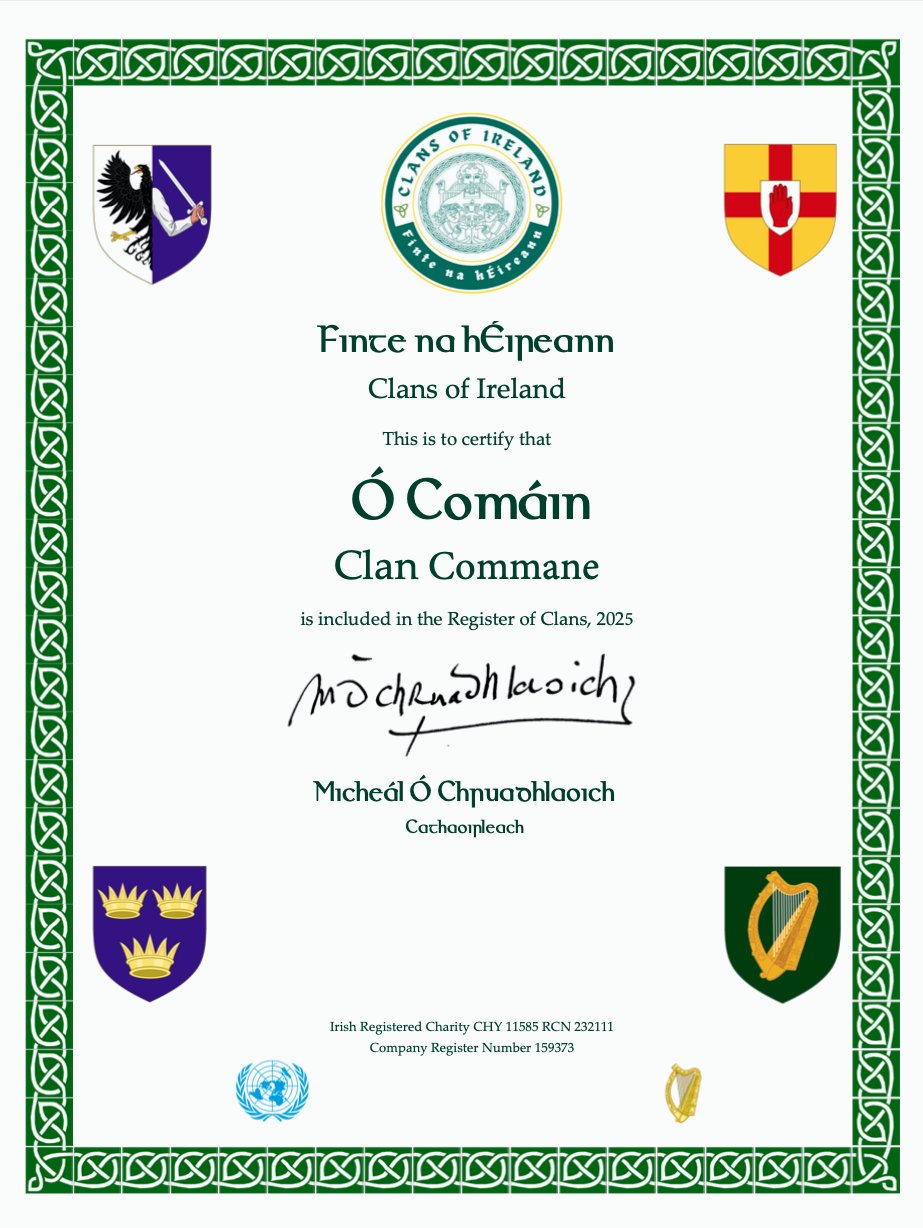
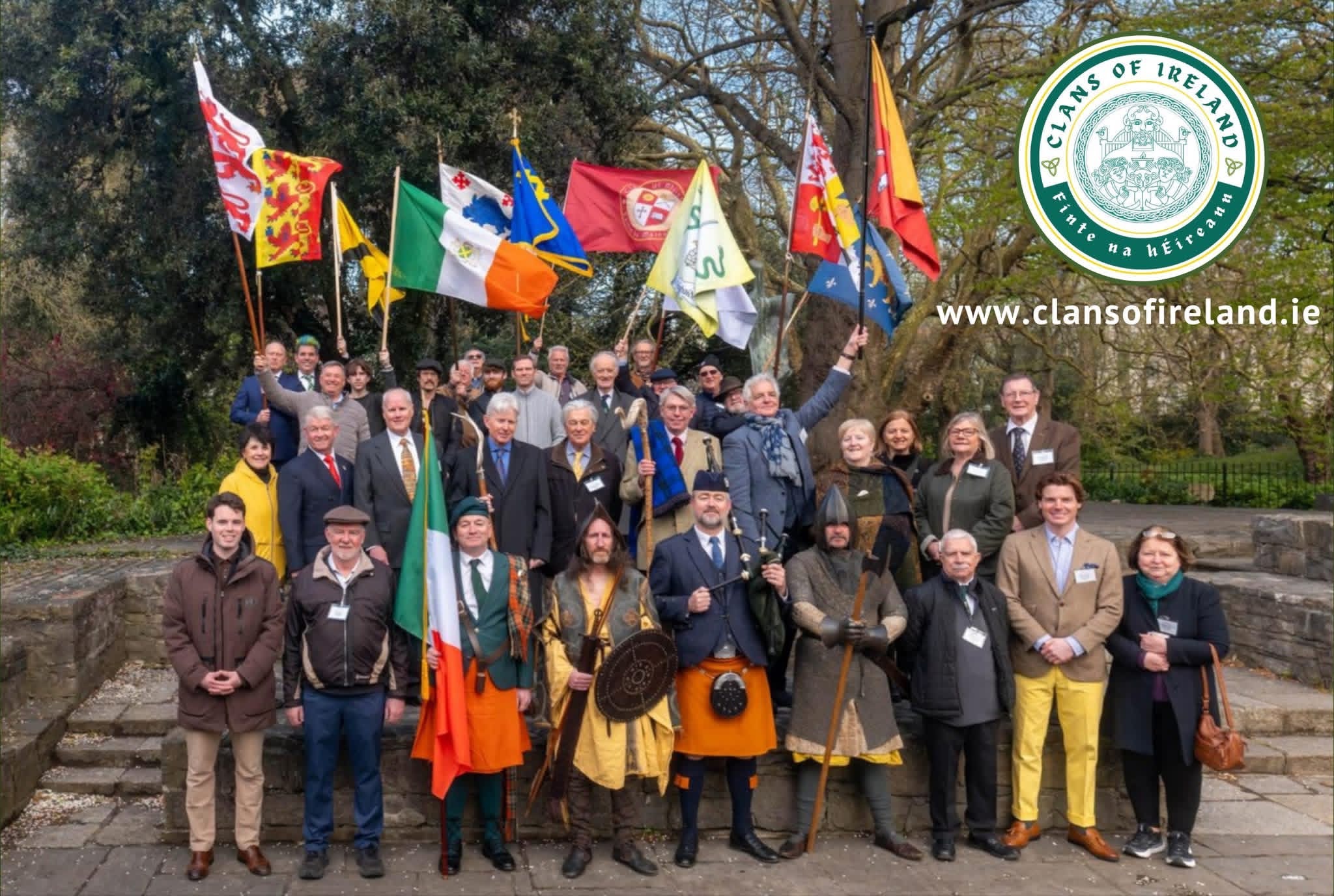
Clan Ó Comáin was officially recognised by Clans of Ireland — Finte na hÉireann — in 2025, under the patronage of Michael D. Higgins, President of Ireland. The committee of Clans of Ireland verified the antiquity of the Irish Gaelic name and the clan's rightful place among the historic clans of Ireland.40

The clan revival was inspired by the memory of Ronan James Patrick Commane (1989–2023), the second son of Fergus Commane, Chief of Clan Ó Comáin. Ronan's love for his extended family and for all people inspired the rebirth of the clan in his memory.

Fergus Commane, as Taoiseach successor consecrated by derbhfine under Brehon law, leads the clan from the clan seat of Newhall House in County Clare — within the same Clare landscape where the family's name has been recorded continuously since the 7th century. He is also custodian of Killone Abbey and the Holy Well of St John the Baptist on the Newhall Estate.

The clan has also been noted in Burke's Peerage and is listed in the Clans of Ireland Register 2026. Antoin Commane serves as Clan Tanist, representing the clan at official gatherings including the 2026 Clans of Ireland assembly in Dublin.

The clan welcomes all who carry the name in any of its variants, all who trace their roots to Ireland, and all who love Gaelic culture and heritage — from County Clare to Chicago, from Kerry to New York, from Munster to Melbourne. The story of Clan Ó Comáin is one of the oldest in Ireland — and it is far from over.

Clans of Ireland Certificate of Recognition — Ó Comáin / Clan Commane, Register of Clans 2025
Certificate of Recognition — Finte na hÉireann / Clans of Ireland, 2025. Signed by Micheál Ó Cnuaóhlaoich, Cathaoirleach.
Clans of Ireland gathering Dublin 2026
Clan Ó Comáin at the Clans of Ireland gathering, Dublin 2026
Chapter XII

In conclusion

An ancient Gaelic royal house

What this body of evidence establishes is that Clan Ó Comáin is an ancient Gaelic royal house with a documented place in the early-medieval Irish political order — preserved in the manuscript genealogies, attested in the royal annals of the 7th and 8th centuries, anchored to a high-status fort and inauguration site at the political frontier of north Clare, and confirmed in continuous male descent by Y-DNA evidence in Ireland stretching back four millennia.

The Ó Comáin name appears in pedigree tracts under its own segment, Clann Comáin, within the royal line of Uí Maine in Connacht — descent traced in the Book of Lecan through ten generations from Conall O'Comáin back to Coman, son of Breanan Dall, twelfth king of Uí Maine.58 In Munster, three Commán-line Kings of the Déisi Muman frame Commán mac Cobthaig — the likely namesake of Cahercommane: his father Cobthach (d. 632 AD),8a his son Suibne (d. 658 AD),9 and his grandson Congal (d. 701 AD, guarantor of the Cáin Adamnáin in 697).1013b The chiefly line of the sept continues in Pender's Déisi Genealogies into the late 8th to 9th century.29 The chiefdom of Tulach Commáin held its capital at Cahercommane on the eastern edge of the Burren, from the 7th to the 9th centuries — a triple-ring stone fort whose archaeological scale and inauguration site place it firmly within the high-status royal-tier polities of early-medieval Ireland (Cotter 2012). Y-DNA testing places the modern male line on the deep Munster substratum, on a branch parallel to but distinct from the Dál gCais — confirming a continuous Irish patriline that pre-dates every named medieval Irish dynasty.

Few Gaelic kindreds in modern Ireland can show a documentary record reaching the 7th-century annals, an archaeological seat of recognised early-medieval status, and Y-DNA confirmation of unbroken male descent from before the historical period. The Ó Comáin are one of those few. The clan was overshadowed in the standard histories — eclipsed by the rising Dál gCais in the 10th century, dispossessed of territorial authority in the 13th, and subsequently recorded in Clare under the anglicised forms Comyn, Coman, and Cummins rather than Ó Comáin. The modern standardised Irish-language form Ó Comáin dates to the Caighdeán Oifigiúil of 1958; before that the name appeared in many spelling variations in both Gaelic and anglicised forms — and in the formal documentary record most often, in Clare, as Comyn — which is why a search of the late-medieval Thomond record under "Ó Comáin" alone returns little, while the same record under "Comyn" returns recognised landholders and armigerous families across the period.

The pedigree set out on this page is the first integrated treatment of the surviving evidence — documentary, archaeological and genetic. The case is set out; the reader can weigh it.

Your family belongs in this story.

Join the revival — from €49/year See membership tiers

In the Brehon tradition, kin was chosen as much as born. The doors of Ó Comáin are still open — whatever name you carry.

Sources & footnotes

References

  1. 1Family Tree DNA, Big-Y 700 test results, Kit No. IN143661. Haplogroup R-BY14247 confirmed. R-L21 block tree verified via FTDNA block tree viewer, April 2026.
  2. 2R-L1066 ancient DNA identifications: ancient remains Scotland 1500–1300 BC; further ancient individual Scotland 43 BC–117 AD. Source: FTDNA haplogroup project research data and academic aDNA studies referenced in the R-L21 project. R-L21 Ireland distribution: 678 matches (FTDNA). R-Z253 Ireland 110 vs Scotland 47.
  3. 3R-BY14247 terminal haplogroup: Ireland + 1 unknown. Living DNA match: Cornelius Moylan, identified via FTDNA matching. Moylan is an Irish surname associated with Clare and Munster.
  4. 4R-Z2534 is a deep Bronze Age branch in Ireland; the Ó Comáin line diverges from the Z2534 substratum upstream of the historical medieval dynasties of Munster, with the split estimated at c. 1500 BC based on SNP dating methodology (FTDNA block tree analysis). The Ó Comáin patriline tests negative for the downstream marker L226 — the defining genetic signature of the Dál Cais — and is therefore definitively non-Dalcassian. The line shares its deep Bronze Age origins with multiple Munster kindreds but does not descend from the same medieval kindred as the family of Brian Boru.
  5. 5Primary manuscript source: Uí Maine tract, Book of Lecan (Leabhar Mór Leacáin, RIA MS 23 P 2, fol. 90–92), compiled c. 1418 at the Mac Fhirbhisigh school of Lecan, Co. Sligo, for Gilla Iosa Mór Mac Fhirbhisigh, hereditary historian of the O'Dowds of Tireragh. The Ó Comáin descent appears under its own segment heading — rendered as "The Clann Comáin" in O'Donovan's English translation. Published critical edition: O'Donovan, John. The Tribes and Customs of Hy-Many, commonly called O'Kelly's Country. Dublin: Irish Archaeological Society, 1843, pp. 26–27. The pedigree of the line ends with the entry: "Conall, son of Cormac, son of Ceithernach, son of Fogartach, son of Fearadhach, son of Eachtghal, son of Sechnasach, son of Congal, son of Eoghan, son of Coman, son of Brenainn Dall, son of Cairpri Fechine, son of Fearadhach, son of Lughaidh, son of Dalian, son of Bresal, son of Maine Mor" (O'Donovan 1843, English translation). Conall O'Comáin descended through the eponymic ancestor Coman — one of the eight sons of Brenainn Dall, 12th King of Uí Maine — to Maine Mór, founder of the kingdom of Uí Maine c. 357 AD. The pedigree is not carried forward in the manuscript beyond Conall. O'Hart, John. Irish Pedigrees, 5th edition (Dublin: James Duffy & Co., 1892), carries this same descent into modern compilation and identifies the terminal Conall as the Conall O'Comáin dispossessed in 1225 at the Anglo-Norman grant of the Lordship of Connacht to the De Burc family. For the wider scholarly treatment of the Uí Maine kindreds in the annals and genealogies down to 1225, see Kelleher, J. V. "Uí Maine in the annals and genealogies to 1225," Celtica 9 (1971), pp. 61–112. The seventeenth-century compilation by Dubhaltach Mac Fhirbhisigh, Leabhar na nGenealach (the Great Book of Irish Genealogies, compiled 1645–1666 at Galway), is a further authority worth consulting for the early material; modern critical edition: Mac Fhirbhisigh, Dubhaltach. Leabhar mór na nGenealach: The Great Book of Irish Genealogies, ed. and trans. Nollaig Ó Muraíle (5 vols., Dublin: De Búrca Rare Books, 2003–2004).
  6. 5aA note on the form of the name. In the Book of Lecan the pedigree is written in the medieval Irish convention as "Conall, mac Cormaic, mic Ceithernaig, mic Fogartaig…" — bare patronymic, no surname. By the early thirteenth century, however, hereditary surnames had crystallised in Ireland, and the family of the Clann Comáin would have been known to their contemporaries as Ua Comáin / Ó Comáin — descendants of the eponymic ancestor Coman. The patronymic form preserved in the manuscript is the genealogical-tract convention, not the contemporary surname; the kindred itself is named in the manuscript as Clann Comáin. The page accordingly uses the surname form "Conall O'Comáin" in narrative context and preserves the manuscript patronymic form in this and the preceding footnote, where the scholarly form belongs.
  7. 6Kingdom of Uí Maine: established by Máine Mór mac Eochaidh, c. 357 AD. O'Hart (1892). The kingdom occupied what is now east Galway and south Roscommon.
  8. 7Cairbre Crom, 11th King of Uí Maine, fl. c. 556 AD. O'Hart (1892). Related families through Cairbre Crom: Clancy, Kelly, Madden, Tracy, Hannan, Kenny, Colman, Egan, Larkin.
  9. 8Death of Breanan Dall, 12th King of Uí Maine: Annals of Ulster, 597 AD (also noted at 601 AD in some recensions). Mac Airt, Seán and Mac Niocaill, Gearóid (eds.). The Annals of Ulster. Dublin: DIAS, 1983.
  10. 8aCobthach, king of the Déisi, died 632 AD. Annals of Inisfallen s.a. 632 — Mors Cobthaig rig na nDési. Pender (ed.), The Déssi Genealogies (Dublin: Irish Manuscripts Commission / Stationery Office, 1937), Index s.n. Cobthach, identifies the annalistic king with the Cobthach who appears in the Déisi genealogies as father of Cóemán / Commán (Index s.v. Coman; Cumán) — the kindred preserved across all three manuscript witnesses (Book of Lecan §§55–59, Book of Leinster §§17–40, Book of Ballymote §§36–42) under the Uí Fhir Gair / Uí Fhothaid sub-tract of the Genelach na nDéisi. Cobthach is the first king of the Déisi Muman whose obit is recorded in any chronicle tradition, and through his son Commán mac Cobthaig — the clan-anchor of the Munster Ó Comáin line — is the documented head of the dynastic chain that produces the kings Suibne mac Commáin (d. 658) and Congal mac Suibne mac Commáin (d. 701).
  11. 9Suibne mac Comáin, in the succession of kings of Déisi Muman, died 658 AD. Annals of Inisfallen s.a. 658 (Mac Airt, ed., The Annals of Inisfallen, Dublin: DIAS, 1951, p. 94). His death was preserved as a marginal entry in a contemporary Easter-table, analysed in Ó Cróinín, 'Early Irish Annals from Easter-Tables: A Case Restated', Peritia 2 (1983), 74–86, at p. 83. Genealogical placement: Pender (ed.), The Déssi Genealogies (Dublin: Irish Manuscripts Commission / Stationery Office, 1937), §§57–59 (Book of Lecan 101r°c); §§38–40 (Book of Leinster 328c).
  12. 9aThe Old Irish personal name. Pender (1937) preserves the clan-anchor's name in the form Cóemán across his three-manuscript collation, with Comán, Caemán and Cumán recorded as scribal variants (Index s.v. Coman; Cumán). The root cóem in Old Irish carries the meaning "dear, beloved, gentle, fair" (Royal Irish Academy, Dictionary of the Irish Language, eDIL, dil.ie/9911) — the same root that produces Caoimhín (Kevin), Caoimhe and the modern name Caomhán. The diminutive Cóemán carries the affectionate sense "little dear one" or "gentle, fair little one." The older Woulfe (1923) etymology from cam ("crooked, bent") is not supported by the manuscript record: a personal-trait nickname does not appear as a named ancestral position across multiple royal-house genealogies, as Comán demonstrably does. The cam etymology is also the source of the rare Hurley anglicisation (camcamán, a hurley stick), discussed further on the Surname Variants page.
  13. 10Congal mac Suibne, king of the Déisi, died 701 AD. Annals of Ulster s.a. 700 (recte 701), Annals of Tigernach, Chronicon Scotorum, Annals of Roscrea. The reader will encounter both spellings of this individual's first name in the primary sources: the Annals of Ulster record him as "Conall mac Suibne," while the Cáin Adamnáin guarantor list (697) and the medieval genealogies in the Book of Lecan and Book of Leinster name him "Congal mac Suibne." This is a well-known and unproblematic manuscript variation — a single individual recorded under two closely related Old Irish forms across the surviving sources, not two separate persons. Modern scholarship treats them as the same man (cf. Pender 1937; Ó Cróinín 1995). Cáin Adamnáin guarantor list: Meyer (ed.), Cáin Adamnáin, Oxford: Clarendon Press, 1905, §28, p. 18.
  14. 11Célechair mac Commáin, killed at the battle of Corcu Modruad in north-west Clare. Annals of Ulster s.a. 704 (recte 705), Annals of Tigernach, Annals of the Four Masters. Colmán mac Commáin, died on the Aran Islands: Annals of Inisfallen s.a. 751 (Mac Airt, 1951). Commemorated as a bishop and one of the four sages of Ireland in Félire Óengusso and Leabhar Breac.
  15. 12Pender, Séamus (ed.). The Déssi Genealogies. Dublin: Irish Manuscripts Commission / Stationery Office, 1937. The standard critical edition, drawing together the Déisi Muman genealogical tracts preserved in the Book of Ballymote, Book of Leinster, Book of Lecan, Rawlinson B 502, the Book of Uí Maine, the Book of Genealogies of Dubhaltach Mac Fhirbhisigh, and the Book of Genealogies of Mícheál Ó Cléirigh (RIA MS 23 D 17).
  16. 12aCotter, Claire (1999). "Western Stone Forts Project: Cahercommaun Fort, Co. Clare — a reassessment of its cultural context." In Discovery Programme Reports 5. Dublin: Royal Irish Academy / Discovery Programme. The foundational Discovery Programme reassessment of Cahercommaun, in which Cotter introduces the Western Stone Forts grouping (Cahercommaun + Dún Aonghasa + Dún Eoghanachta) as high-status royal-tier polities, and proposes the Uí Fidgeinti / Uí Chormaic identification (Commán mac Mainich) tentatively rather than categorically. Cotter also notes the Célechair / Colmán mac Commáin brother-relationship as one that "could have been" established but is not proven from the surviving record.
  17. 13The overthrow of the Corcu Mruad by the Déisi in 744 AD: Annals of Ulster s.a. 743 (recte 744), Annals of Tigernach — "Foirddbe Corcu mudruadh don Deiss." Pender (1937), Appendix II. On the wider Burren chiefdom context see Cotter (1999), as cited in fn12a above.
  18. 13aTorpad mac Cernaig, lord of the Déisi and king of the Corcu Mruad, died 765 AD. Annals of the Four Masters s.a. 760 (recte 765) — "Torptha mac Cernaich tigherna na nDéisi dég." Annals of Inisfallen s.a. 769 — "Mors Torptha rig Core mdruad." Pender (1937), Appendix II at AD 765 (p. 41), presents both titles within a single chronological entry — "A.D. 765. — Torptha mac Cernaich tigherna na nDéisi dég. — FM 760 (recte 765); Ann. Inisf. (=769) has: Mors Torptha rig Core mdruad" — treating the AFM and AI attestations as the same death event recorded in two annal traditions. The identification is Pender's, not our synthesis. Pender places the 765 entry chronologically within his treatment of the Déisi royal succession alongside named Déisi Muman kings, with no editorial qualification of Torpad as Déisi Tuaiscirt — a distinction the annal tradition makes explicitly when it applies, as at AU 836: "Ar catha forsin Deis tuaisciurt o Genntibh" (preserved at Pender Appendix II). See also Pender's Index s.n. 'Cernach' and 'Torpthe' for the filiation across the apparatus.
  19. 13cThe case for Cahercommane as the territorial seat of a Déisi-Muman sept of the Commán line rests on the convergence of four bodies of evidence already cited: (i) the named Commán-line kings of the Déisi Muman in the annals — Suibne mac Comáin (d. 658, AI; cf. Ó Cróinín 1983) and Congal mac Suibne (d. 701, AU/AT/CS/AR; Cáin Adamnáin guarantor 697) — see Pender (1937), §§38–40 (Book of Leinster 328c) and §§57–59 (Book of Lecan 101r°c); (ii) the additional Commán-named figures Célechair (d. 705, killed at Corcu Modruad) and Colmán (d. 751, on Aran), within the wider Munster ambit; (iii) Pender's explicit attestation of the Uí Cormaic — to whom Gibson tentatively assigned the Burren chief — among the Déisi Muman septs themselves: "cenél úa Cormaic lasna Déssib muman" (Rawlinson B 502, 143b; Book of Lecan); (iv) the documented Déisi political reach into north-west Clare by 765 AD, evidenced by Torpad mac Cernaig's dual title (see footnote 13a). The argument is one of cumulative plausibility from primary sources, not of single-document proof. On the elective rotation of Déisi kingship across multiple septs each holding its own territorial identity see Pender (1937), Appendix I, septal index.
  20. 13dGibson's "short-lived" framing for the Tulach Commáin chiefdom (Gibson 1990, p. 394; Gibson 2012) is institutionally compatible with a Déisi-Muman vassal-sept reading. The political architecture of pre-Dalcassian Munster was hierarchical: the Eóganacht of Cashel held the over-kingship of Munster (rí Caisil, rí Muman), with numerous client kindreds — including the Déisi Muman as a confederation — operating within the Eóganacht-led political order. A chiefdom held by a Déisi sept under Eóganacht overlordship at Cashel, on the Burren frontier with Corcu Mruad, would fit Gibson's institutional description of "a short-lived Eóganacht chiefdom" without requiring Eóganacht-blood descent. Pender's textual attestation of the Uí Cormaic among the Déisi Muman septs — "cenél úa Cormaic lasna Déssib muman" (Rawlinson B 502, 143b) — settles the institutional question on documentary grounds: the Uí Cormaic were Déisi Muman, regardless of any earlier Eóganacht ancestral connection in the genealogical tradition Gibson worked from. The two readings are not in conflict; they describe the same sept from different angles — Gibson from later medieval genealogical tracts emphasising Eóganacht ancestral claims, Pender from the earlier Déssi Genealogies placing the sept within the Déisi federation it actually inhabited.
  21. 13bThe Synod of Birr, County Offaly, 697 AD, under Adomnán, Abbot of Iona. Déisi kings named as guarantors of the Cáin Adamnáin: Congal mac Suibne (titled 'ri inna nDéissiu', king of the Déisi); Andelaith (titled 'ri in Deissi tuaiscert', king of the Déisi Tuaiscirt); Eochaid mac Dúnchada (titled 'ri na nDéisi', king of the Déisi); and Elodach mac Dunlang, who is named three times in the same document with three reinforcing attributions: in the guarantor list at §28 as 'ri Desmuman' (king of South Munster), in §17 as 'Elodach ri na nDéisi' (king of the Déisi) among the kings who opposed the Law, and in §18 as 'flaith Feimin na nDési' (chief of Femen of the Déisi — Femen being the central Déisi Muman heartland in south Tipperary). The three attestations read together identify him as a Déisi king operating within the southern Munster political sphere. Meyer (ed.), Cáin Adamnáin, Oxford: Clarendon Press, 1905, §28, pp. 18–19. Cf. Ní Dhonnchadha, 'The Guarantor List of Cáin Adamnáin, 697', Peritia 1 (1982), pp. 178–215; and 'The Lex Innocentium: Adomnán's law for women, clerics and youths, 697 AD', in Chattel, Servant or Citizen: Women's Status in Church, State and Society, ed. O'Dowd and Wichert, Belfast: Queen's University, 1995, pp. 58–69.
  22. 13eOn the multi-branch Déisi and the dual-level succession mechanism. The Déisi federation was not the simple two-kingdom structure (Déisi Muman = south-east Munster, Waterford/Tipperary; Déisi Tuaiscirt = East Clare) sometimes assumed. The 697 Cáin Adamnáin attestation of four concurrent Déisi-related kings (see fn13b) — two of them each titled "king of the Déisi" (Congal mac Suibne ri inna nDéissiu, Eochaid mac Dúnchada ri na nDéisi) alongside the distinct Déisi Tuaiscirt and South Munster kingships — demonstrates a multi-branch confederation, within which the Cahercommane sept on the Burren frontier reads naturally as one Déisi Muman branch. Succession operated on two distinct patterns. At the kingdom level, the over-kingship of the Déisi Muman rotated among the septs — illustrated by the gap between Suibne's death (658) and his son Congal's accession (c. 690s), with Bran Find mac Maíli Ochtraig of a different sept holding the kingship in the interval (d. 671, Annals of Ulster). At the sept level, the chiefly title was owned by the sept's derbfine aristocratic nobles — the four-generation patrilineal elders — and held in trust rather than personally inherited; in practice the tánaiste (heir-elect) was usually the eldest son of the sitting chief, so chiefship most often passed father-to-son, but a weak or unfit heir could be passed over in favour of another member of the derbfine noble line, and internal power struggles could redirect succession at any point. The Cahercommane sept's chiefly line — three of whom were Kings of Déisi Muman: Cobthach (d. 632), Suibne mac Commáin (d. 658), and Congal mac Suibne (d. 701) — continues by tanistry, not by direct father-to-son descent, through Congal's brother Dubluige mac Suibne to Faelchu mac Con dinisc, with the chiefly line continuing into the late 8th to 9th century, estimated (see fn29), within this dual framework: elective rotation among septs above, normally hereditary but senior-noble-elective within the sept itself. On derbfine and tanistry succession see Pender (1937), Appendix II; Mac Niocaill, Ireland before the Vikings (1972); Charles-Edwards, Early Irish and Welsh Kinship (1993).
  23. 14Death of Saint Commán 747 AD: Annals of Ulster. Mac Airt & Mac Niocaill (eds.) (1983).
  24. 15Dictionary of National Biography (1887), entry for Commán of Roscommon: "also founded the church of Ceann Mara, now Kinvara." Oxford Dictionary of National Biography confirms death date 747 AD.
  25. 16Death of Colmán mac Commáin on the Aran Islands 751 AD: Annals of Inisfallen. Mac Airt, Seán (ed.). The Annals of Inisfallen. Dublin: DIAS, 1951.
  26. 17Gilla Cómáin mac Gilla Samthainde, fl. c. 1072 AD, poet. Works incorporated in the Lebor Gabála Érenn. Mac Alister, R.A.S. (ed. and trans.). Lebor Gabála Érenn. Irish Texts Society, 1938–1956.
  27. 18Ferchess mac Commáin (also Ferches, Forchess) — poet, seer and warrior of the household of Ailill Aulom, king of Munster, in two related early Irish sagas: Cath Maige Mucrama ("The Battle of Mag Mucrama") and the older Scéla Moshauluim ocus Maic Con ocus Luigdech ("The Story of Moshaulum and Mac Con and Luigith"), 9th century, surviving in Oxford Bodleian Library MS Laud Misc. 610. Both texts record Ferchess as the agent of Ailill's vengeance against Lugaid Mac Con, who had slain Ailill's seven sons at Mag Mucrama; in Cath Maige Mucrama §72 Ferchess casts the spear that kills Lugaid, and Scéla Moshauluim adds the detail that Fionn mac Cumhaill avenged Mac Conn by slaying Ferchess seven years later at the Pool of Ferchess on the Bann (or at Ess Mage). The Cath Maige Mucrama text is online at the Mary Jones Celtic Literature Collective: maryjones.us/ctexts/mucrama.html. Standard critical edition of both texts together: O Daly, Máirín (ed.), Cath Maige Mucrama: The Battle of Mag Mucrama, Irish Texts Society 50 (Dublin, 1975). The earlier Scéla Moshauluim text was first edited by Meyer, Kuno, "Ailill Aulom, Mac Con, and Find ua Báiscne", in Fianaigecht, Todd Lecture Series 16 (London: Hodges, Figgis, 1910), pp. 28–41. Modern summary of the narrative: Try, Rebecca, Leadership and Virtue: A Character Analysis of Fionn mac Cumhaill and King Arthur in the Later Medieval Period, PhD thesis, Queen's University Belfast (2020), Appendix B (Fionn Material Text Summaries), text 130, available at QUB Pure Research Portal.
  28. 19Gibson, D. Blair. From Chiefdom to State in Early Ireland. Cambridge: Cambridge University Press, 2012. Chapter 4: "An Early Medieval Chiefdom of Northern Clare."
  29. 20Gibson (2012), p. 89–147. The chiefdom characterised as "important but not dominant" within the Kingdom of Cashel's political sphere.
  30. 211585 Elizabethan deed referencing "Tullagh Coman": noted by Thomas Johnson Westropp in his surveys. Westropp, T.J. Archaeology of the Burren. Proceedings of the Royal Irish Academy, 1900–1902.
  31. 22Westropp, Thomas Johnson. Early 20th century surveys of the Burren. Westropp served as president of the Royal Society of Antiquaries of Ireland and documented Clare's antiquities extensively.
  32. 23"It has more fairies than all the other forts of the hill" — local tradition recorded in Gibson, David Blair (Ph.D., 1990). Tulach Commáin: A View of an Irish Chiefdom. PhD dissertation, University of California, Los Angeles, p. 242.
  33. 24Cahercommane dimensions: outer wall 350ft east-west × 245ft north-south. Inner wall: 5ft thick, 4ft high, rises 12–14 feet above the cliff. 16,500 tons of stone in the inner wall. Hencken, H.O'N. Cahercommane: A Stone Fort in County Clare. Royal Society of Antiquaries of Ireland, 1938.
  34. 25Third Harvard Archaeological Expedition, 1934, led by Hugh O'Neill Hencken. Silver brooch, National Museum of Ireland. Hencken (1938).
  35. 26Hencken, H.O'N. Cahercommaun: A Stone Fort in County Clare. Royal Society of Antiquaries of Ireland, 1938, p.3: retained "Cahercommaun" "in spite of possible linguistic objections." Cotter, Claire. Western Stone Forts Project: Excavations at Dún Aonghasa and Dún Eoghanachta. Discovery Programme monograph. Wordwell Ltd, 2012, pp. 83–87–90 (ISBN 978-1-905569-69-4). Cotter confirms Westropp used both "Cahircommane" and "Cahercommaun"; establishes the element -aun derives from Irish -án; concludes the fort most probably took its name from a Uí Fidgeinti sub-king named Commán; and identifies the 1585 deed in Irish Fiants of Elizabeth I as the earliest documentary reference to both Cahercommane and Tullycommon.
  36. 26aGibson, D. Blair. Tulach Commáin: A View of an Irish Chiefdom. PhD dissertation, University of California Los Angeles, 1990, Fig. 11.1 — map of the early-medieval polities of north Clare, placing Corcu Mruad territory in the north-west of the modern county, with the Tulach Commáin chiefdom (containing Cahercommane) on the south-eastern Burren as a separately constituted polity. Annals of Ulster s.a. 744: "Foirddbe Corcu mudruadh don Deiss" — the destruction of the Corcu Mruad by the Déisi.
  37. 27No occupation past the 10th century: archaeological evidence from the 1934 Harvard excavation under Hencken (published 1938) and the 1999 Discovery Programme reassessment by Cotter (Western Stone Forts Project, Royal Irish Academy). Gibson (2012), p. 102.
  38. 28Henry III grant of Lordship of Connacht to De Burc (Burke) family, 1225. Calendar of Documents relating to Ireland, 1171–1251.
  39. 29Conall O'Comáin, last recorded head of the family in the Connacht / Uí Maine strand: terminal generation of the Clann Comáin segment in O'Donovan, Tribes and Customs of Hy-Many (1843). Subsequent compilation: O'Hart, Irish Pedigrees (1892). See footnote 5 for the full citation chain. The parallel Munster / Déisi Muman strand of the same kindred preserves the chiefly kindred line through Cobthach (d. 632, king of Déisi Muman) → Commán mac Cobthaig → Suibne mac Commáin (d. 658, in the succession of kings). At Suibne's generation the kindred branches: kingdom-level kingship passed to his son Congal mac Suibne (d. 701, king of the Déisi, guarantor of the Cáin Adamnáin 697; see fn10), while after his death the Pender chiefly patriline of the sept continues through Suibne's other son Dubluige mac Suibne — Pender §59 (Book of Lecan 101r°c) records Suibne as having nine sons — and then Conamla → Con dinisc → Faelchu mac Con dinisc, with the chiefly line continuing into the late 8th to 9th century (estimated). By clan tradition this kindred is identified as the chiefly line that held the Cahercommane chiefdom. Beyond Faelchu the specific Cobthach-line descent is not carried forward in the manuscript record — though Cahercommane was archaeologically occupied through the late 9th century — and the Déisi Muman kingship from the late 8th century onwards is recorded in the annals as rotating among collateral septs of the confederation, in the standard elective pattern documented in Pender (1937), Appendix II.
  40. 29aSurvival of the older native kindreds under O'Brien overlordship: by the 12th century the Corcu Mruad territory had been divided into Corcu Modhruadh Iartharach (Western Corcomroe) and Corcu Modhruadh Oirthearach (Eastern Corcomroe / Burren), ruled by the Ó Conchubhair Corcomroe (West) and the Ó Lochlainn (East / Burren) respectively — both Corcu Mruad-derived ruling lines. The Ó Lochlainn took their name from Lochlainn, lord of Corcomroe in the 10th century, and ruled the Burren as Princes of Burren under O'Brien overlordship to the mid-17th century, finally evicted in the Cromwellian settlement; their chief residence was Gragans Castle, with clan members buried in the family tomb at Corcomroe Abbey (founded 1194 by Donal Mór Ó Briain). The McMahons of Corcabaskin (Mac Mathghamhna) similarly survived as the recognised ruling line of west Clare under O'Brien overlordship into the 17th century. The pattern across post-Dalcassian Clare was reorganisation of native kindreds under O'Brien suzerainty, not their extinction. The Corcu Mruad-derived lines (Ó Lochlainn Princes of Burren, Ó Conchubhair Corcomroe) held the Burren proper to the north and west of Cahercommane — the modern Baronies of Burren and Corcomroe; the Inchiquin territory in which Cahercommane stood passed to the Ó Dea of Cenél Fearmaic under O'Brien overlordship. See MacLysaght, Surnames of Ireland (1985), s.v. Ó Lochlainn II, Ó Conchubhair Corcomroe, Mac Mathghamhna of Corcabaskin, Ó Dea; Frost, The History and Topography of the County of Clare (1893); and the relevant entries in the Annals of Inisfallen for the kingship of Corcu Modruad across the 10th–13th centuries.
  41. 30Comyns of Kilcorney, Barony of Corcomroe, Burren: pedigree registered with Ulster King of Arms 1748. Burke's Landed Gentry of Great Britain and Ireland, 1802, pp. 277–278. Sir William Comyn of Limerick, c. 1440, as ancestor.
  42. 311585 Elizabethan deed: "Tullagh Coman." Westropp surveys. See footnote 21.
  43. 32James Comyn receives Doonbeg Castle from Daniel O'Brien, 1619. Clare county records.
  44. 32aUlster King of Arms manuscript, c.1650, page 83 — shield labelled "Comen" within the alphabetical sequence of C-surnames in the volume. National Library of Ireland, MS catalogue vtls000540616. Comen does not appear as a surname in MacLysaght's The Surnames of Ireland (1985), Patrick Woulfe's Sloinnte Gaedheal is Gall — Irish Names and Surnames (1923), or O'Hart's Irish Pedigrees (1892); the spelling is best understood as a 17th-century clerk's variant or misspelling of Coman or Comyn.
  45. 33Pender's Census 1659: "Comane &c" — 11 families, Barony of Tulla, County Clare. Pender, Séamus (ed.). A Census of Ireland circa 1659. Dublin: Stationery Office, 1939.
  46. 34MacLysaght, Edward. Irish Families, their Names, Arms and Origins. 4th edition. Dublin: Irish Academic Press, 1985, pp. 66–67.
  47. 35Na Comáin, Iveragh barony, Kerry: Logainm.ie confirmed Irish form Na Comáin, genitive na gComán, Dromod parish, Gaeltacht area.
  48. 36John Commane, of Newhall, Ballyea townland, Killone parish: Tithe Applotment Book 1828. National Archives of Ireland. Ballyea and Killone are contiguous with the Newhall demesne.
  49. 37Commane Road, Baldwinsville, New York (Onondaga County). John Commane absent from Griffith's Valuation 1855 for Killone parish.
  50. 38O'Donovan, John. The Tribes and Customs of Hy-Many, commonly called O'Kelly's Country. Dublin: Irish Archaeological Society, 1843. O'Hart, John. Irish Pedigrees, 5th edition. Dublin: James Duffy & Co., 1892. See footnote 5 for the full citation chain.
  51. 39Gibson, D. Blair. From Chiefdom to State in Early Ireland. Cambridge University Press, 2012. ISBN 978-0-521-12432-8.
  52. 40Clan Ó Comáin recognised by Clans of Ireland 2025. Register of Clans 2026, Clans of Ireland — Finte na hÉireann. www.clansofireland.ie.
  53. 41Michael Comyn (1688–1760), of Kilcorcoran, Co. Clare, Gaelic poet. MacLysaght, Edward. Irish Families, their Names, Arms and Origins. Dublin, 1972, p. 103.
  54. 42Michael Comyn (b. 1704), emigrated to France; accepted as nobility of France. MacLysaght (1972), p. 103. See also the Irish Brigades register of noble families in exile.
  55. 43John Francis Comyn (1742–1793), guillotined during the French Revolution as an aristocrat. MacLysaght (1972), p. 103.
  56. 44David Comyn (1853–1907), Clareman, active in the Gaelic League formation. MacLysaght (1972), p. 103.
  57. 45The family as erenaghs of St. Cuimín Fada's church, Connacht; parish of Kilcuimin, Bay of Killala. MacLysaght, Edward. Irish Families (1972), p. 103.
  58. GSGibson, D. Blair. Tulach Commáin: A View of an Irish Chiefdom. Ph.D. dissertation, Department of Anthropology, University of California, Los Angeles, 1990. Committee chair: Prof. Timothy Earle. UMI Order No. 9033924. 456 pp. (Available to members of Clan Ó Comáin through the members' library.) Expanded in book form as: Gibson, D. Blair. From Chiefdom to State in Early Ireland. Cambridge: Cambridge University Press, 2012.